
How I Manage The Inch In A Metric Workshop

Remember this young lady? It’s almost a year since she graced the same place of honour in my first article covering this topic.
Hard to image how far my website and this blog in particular has come since I started in March 2023!! We have just crossed the 40 post line and I trust that there will be many more good things to come.
About this time last year I wrote an article asking the question, “which measurement system is better, metric vs imperial?”.
I came to the conclusion that it would be hard to categorically state that one is superior to the other and I still hold that opinion. It likely all comes down to which one you grew up with and have become accustomed to in your own workshop.
I have become relatively sure of one or two things related to the imperial side of life over the past year though and at the risk of upsetting some here they are.
The first is this.
By far, and I’m talking by some margin here. Most woodworking project plans out there use imperial measurements. Apart from building from my own designs I’m also a consumer of project plans and online trainings that offer plans and/or instructions, exclusively in imperial measurements. There are some who offer both but they are rare so I can almost guarantee that if you live in the metric world and you use plans from the net or purchase video woodworking courses that you would need to convert inches to millimetres at some point.
The second one is this and may also rile up some readers.
Persons from the world of the millimetres are more likely to convert inches to millimetre than their counterparts in the imperial world would be to convert the other way around. There could be a few reasons for this but here are three I believe to be somewhat true. Number one, relates to the point above, there simply is no need to convert any measurements when the catalogue of project plans, courses and literature available, so heavily favours the inch that you need not even consider an alternative in metric. Case in point, have a look at the range of plans available on Woodsmith, now do a search for the plans available in metric. How many pages of available metric plans vs the total? I’ll save you the trouble 9 against 95.
Don’t get me wrong I have nothing against the guys at Woodsmith! They seem like a bunch of cool guys you could sit down and have a beer with and they make some effort on the metric front at least. Believe me, I feel their pain when it comes to converting plans from one unit of measurement to another.
The second is that it is likely easier to convert the commonly used fractions of inches to millimetre and hit what would be considered standard measurements than the other way around. Someone in the world of inches needs to explain the following to me. I’ve watched YouTube videos where the maker will state that you need a plywood thickness in ¾ inch but in almost the same breath also states that the thickness of the stock isn’t exactly ¾ as the plywood is imported from Europe and is therefore dimensioned in metric. Why not just call it 20mm ply? Could be 18mm too by the way.
The last, and I’m guessing this, is that it’s likely that I have more imperial measuring tools in my workshop than some woodworkers in the imperial world have tools showing millimetres in theirs.
Anyway, I’m not writing this article to work anyone up nor is it an attempt to show one unit of measure as better than another. I am writing it to help users of the millimetre find ways to use the inch in their own workshop. We often have little choice in the matter as I’m not seeing anyone that uses inches rushing to accommodate their metric brethren by converting plans, courses of literature anytime soon!
If I was pushed to give a preference though, and political correctness wasn’t a requirement I would shout from the rooftops that the millimetre was the only one for me! But alas, one needs to be practical in this day and age. This article also exists to inform users of the imperial system that the plans on my site are also in inches. If you follow this link to my shop you can have a look for yourself, even better if you follow this link to sign up to the community you will get access to FREE project plans also in, you’ve guessed it, inches.
So what to do with the inch then?
Option 1: Convert It
That almost sounds religious!
Nothing that drastic I’m afraid, just plug the inches into a converter and use the metric equivalent that comes back.
In the article I wrote last year I mentioned that I liked this one but frankly I haven’t had reason to use anything this involved in over a year. Truth be told the only time I’ve opened this page since that article was to copy the link to use it in this one!
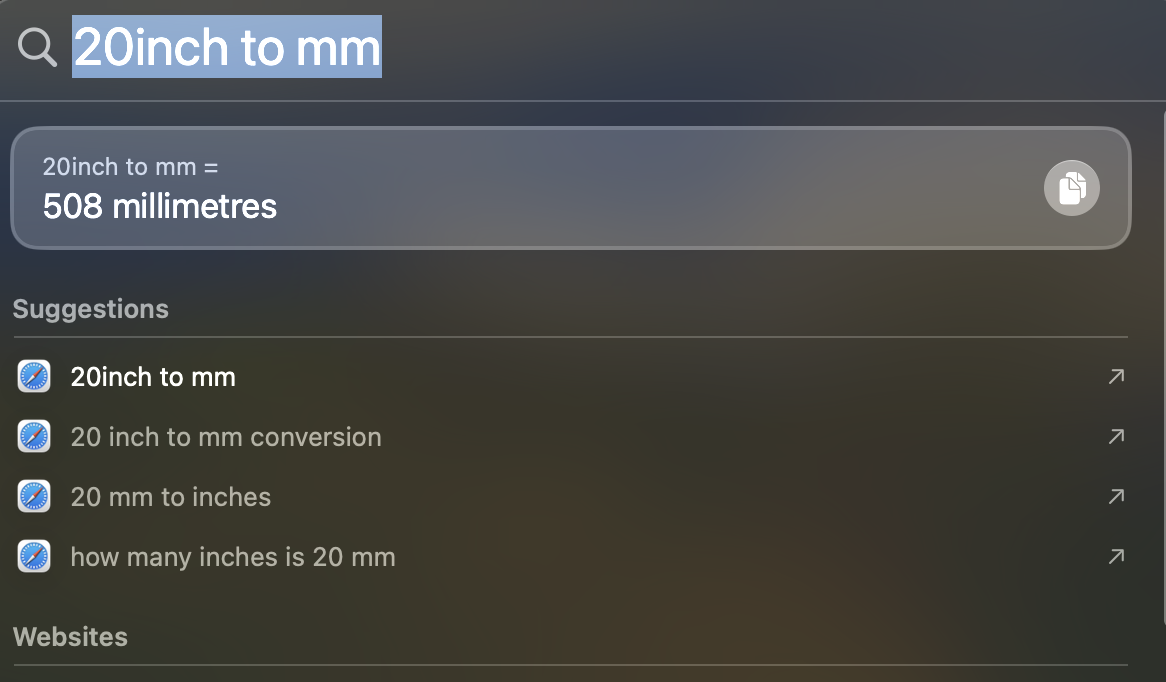
Nowadays I’m more likely to just type mm to inch in Google’s search bar and use the converter offered by Google but even that tends to be too much trouble so when busy at my desktop I just type the inch value into the iMac’s Spotlight search field and add “to mm” and Mac comes back with an answer. Really useful for forex conversions too by the way.
Last option from an electronic point of view would be to use a conversion app but as a recovered app addict I hate a cluttered mobile device so not my first choice for doing conversions.
Something to take note of, the converters covered here will give an exact millimetre conversion that may include a few decimal points. Round the values up or down as you see fit, if the value rounds up or down to a standard metric size as would be the case for laminates made in Europe or anywhere else that uses metric dimensions, bargain!
By the way anyone who insists in cutting wood in fractions of a millimetre needs to get out more. I use stronger clamps to make up for that missing mil or so……..
It’s woodworking, not precision engineering.
Option 2: Measure It
This one I’ve only started doing recently after I acquired a one metre long combination (mm/inch) metal rule. I purchased the rule to measure parts when I started making stick chairs as taught by Chris Schwarz, another staunch incher.
It works surprisingly well, all you need is a combination rule (any size) and a square.
Place the stock of the square flush against the side of the rule and align the blade to the inch measurement in question. Read the corresponding millimetre value and round this up or down to the closest 5mm mark.
Works a treat and requires no electronics or risk of typos. I still need my reading glasses though.
If I like it so much, why not use it all the time? Because I like using this method for longer lengths and at just over 40 inches long the metal rule is pain to pickle up to the home office. That, and the risk of poking my wife in the back with it while we’re both working at our desks. She’s in corporate and in online meetings most of the day, imagine the reaction if I should stab her in the back with a metal rule while she’s in a video call!
When rounding values up or down and you are building from a plan make sure that a round down won’t cause the part to not reach the components that it’s supposed to join into. Rather take that measurement directly between the parts and use the inch measurement as a sanity check.


Option 3: Learn It
I’ve been converting inches to millimetres long enough now to have a ballpark to work with, here are some.
1” equals 25mm.
2” equals 50mm.
½ equals strictly 13mm but I like using 12mm.
¾ equals 19mm but it’s easier to find 18 or 20mm ply.
⅛ equals 3mm and it goes down from there with a 16th being 2mm and a 32nd being 1mm.
You may notice that I haven’t typed out the inch fractions for 1 and 2mm? I rest my case that fractions are hard, even the editor I am using to type this article stops thinking straight at ⅛ and I’m unable to list the actual fractions like the rest!
Keep in mind that my conversion values are nominal and not the exact to the 10th decimal actual conversions but it’s good enough to help me follow along and visualise sizes when watching a woodworking video or looking at a plan. Almost like being able to follow along with a conversation in a foreign language if you know some of the words.
They couldn’t possibly be talking about me when I heard the word for “idiot”, could they?
Option 4: Use It
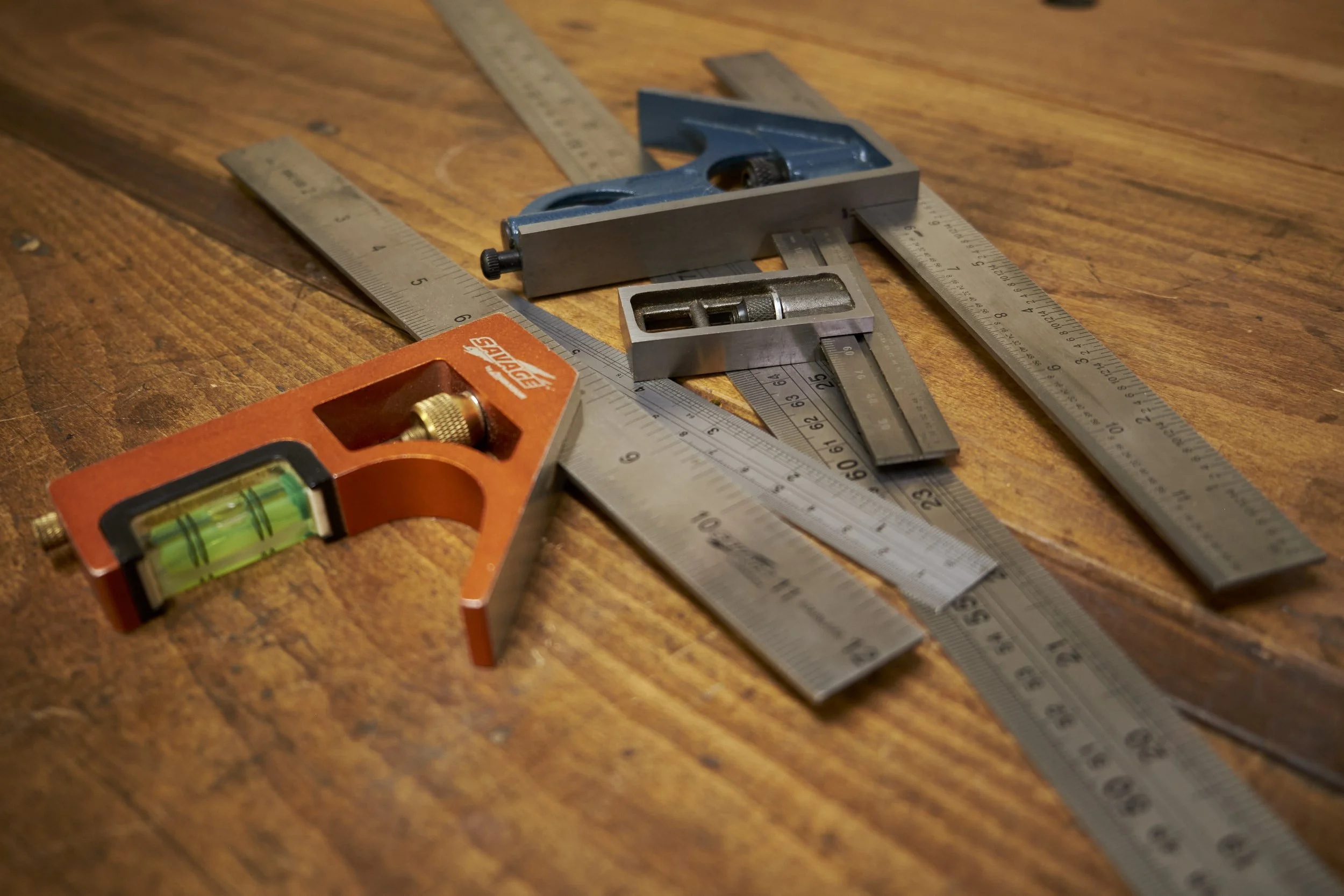
You have the imperial measuring tools available just build the thing in inches.
Likely the advice that will be given by die hard users of the inch whom refuse to change their ways.
You can do this yes and I have myself. Sometimes though, we have jigs and equipment (router bits) in our workshops that only operate in metric so conversions will in some cases still be necessary.
Coming back to router bits it is interesting that in spite of the cutter on the bit making a 20mm slot you can only buy it in a ½ or ¼ inch shank because the standard collet sizes of routers sold here in South Africa are almost exclusively, imperial. I stand to be corrected but in Europe the collet size is 8mm standard.
Option 5: Combine It
Why use one or the other? Why not just combine metric and imperial when building something?
I find that I’m becoming less fussy about converting inches to millimetre or vice versa and none more so when building stick chairs. It isn’t unusual for me to thickness a seat to 50mm and then use the imperial measurements for it’s final size or to mark the positions for the leg mortises and then to promptly drill those mortises and turn the tenons on the legs at 25mm.
Need I mention that the leg dimensions might be in imperial?
Option 6: Let Someone Else Do It
By now I might have mentioned that I offer project plans on my website some of them free, if you can believe that! I might also have alluded to the fact that I design in metric and then convert those plans into imperial just for you.
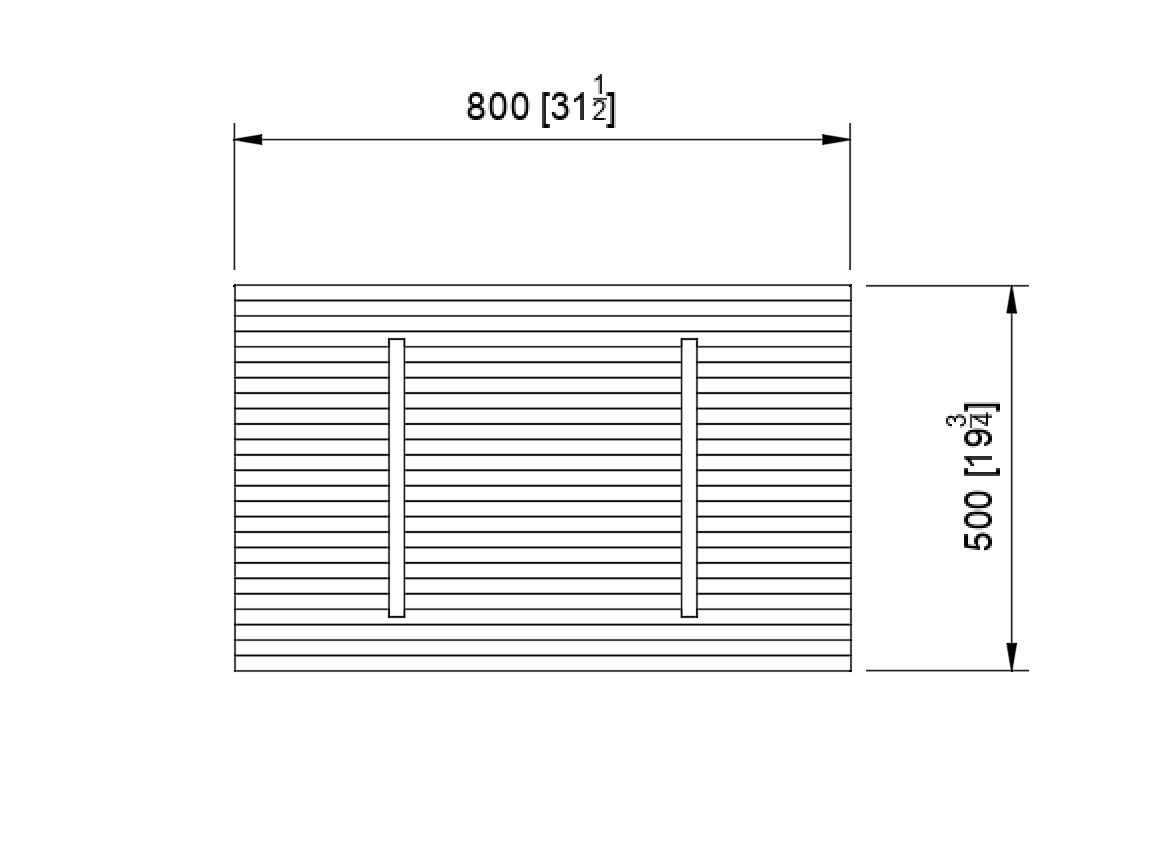
Well, the 3D design program does the conversion for me, all I need to do is select the unit and level of accuracy I would like to dimension the technical drawing in and the software does the rest. I’ve even recently discovered that I can select and edit a secondary unit of measure and that both metric and imperial measurements will be shown on the drawing. I can see myself using this feature in the near future to offer a single plan showing a “combined” technical drawing. I would still need to add an imperial cut list though but it would save a LOT of time compared to creating a plan for both metric and imperial.
No harm in having someone else doing the heavy lifting once in a while.
And there you have it six options for my millimetre loving woodworking friends to manage the inch in their own workshops and prove that there is no reason to shy away from those dreaded inch based project plans. I hope some staunch lovers of the inch also find some use for these when confronted by the exceedingly rare metric only project plan they long to build.
Neither need fear though, our plans bar one are all available in both units of measure and if you would like to learn more and have access to some of them completely free of charge, remember to sign up here.
Now I know that I might have poked fun almost exclusively at the imperialists but I must say that I have come across the occasional metricist who refuse to build anything from a plan that uses inches instead of their beloved millimetre. Honestly I think it has more to do with human stubbornness than any particular preference for a measuring unit.
There is just one more thing I would like someone in the imperial corner to explain to me please.
Why 8/4?