
I Learned CAD for Woodworking. 3D Printing Gave It a New Job

When I first taught myself CAD, 3D printing was not the goal.
The goal was woodworking.
I wanted a better way to design furniture, work through proportions, adapt projects to suit available materials, and solve problems before I started cutting into timber or plywood. CAD became a useful part of my woodworking process because it allowed me to visualise and think through a project more clearly. I could check dimensions, test ideas, adjust material thicknesses, and make sure that the design made sense before committing to the build.
At the time, I never really thought of it as a skill that would eventually lead me into 3D printing.
But that is exactly what has happened.
Over the past two or so weeks, I have started learning 3D printing properly. Not just downloading fun files and pressing print, but trying to understand the machine, the materials, the design rules, and where this process might fit into the kind of work I already do.
At the time of writing, I have logged close to 85 hours of printing time. Out of that, I have printed one articulated gecko and one pickle buddy. Everything else has been calibration tests, practical items, experiments, prototypes, and parts that help me understand what this machine can actually do.
That probably says a lot about how I see the printer.
It is not just a gadget for making novelty objects although my first Dummy 13 is sliced and ready to print!
For me, it is becoming another workshop tool. A different kind of tool, certainly, but one that still rewards the same basic thinking I use in woodworking: understand the problem, respect the material, design around the constraints, and improve through testing.
The design thinking feels familiar
I am not completely new to design.
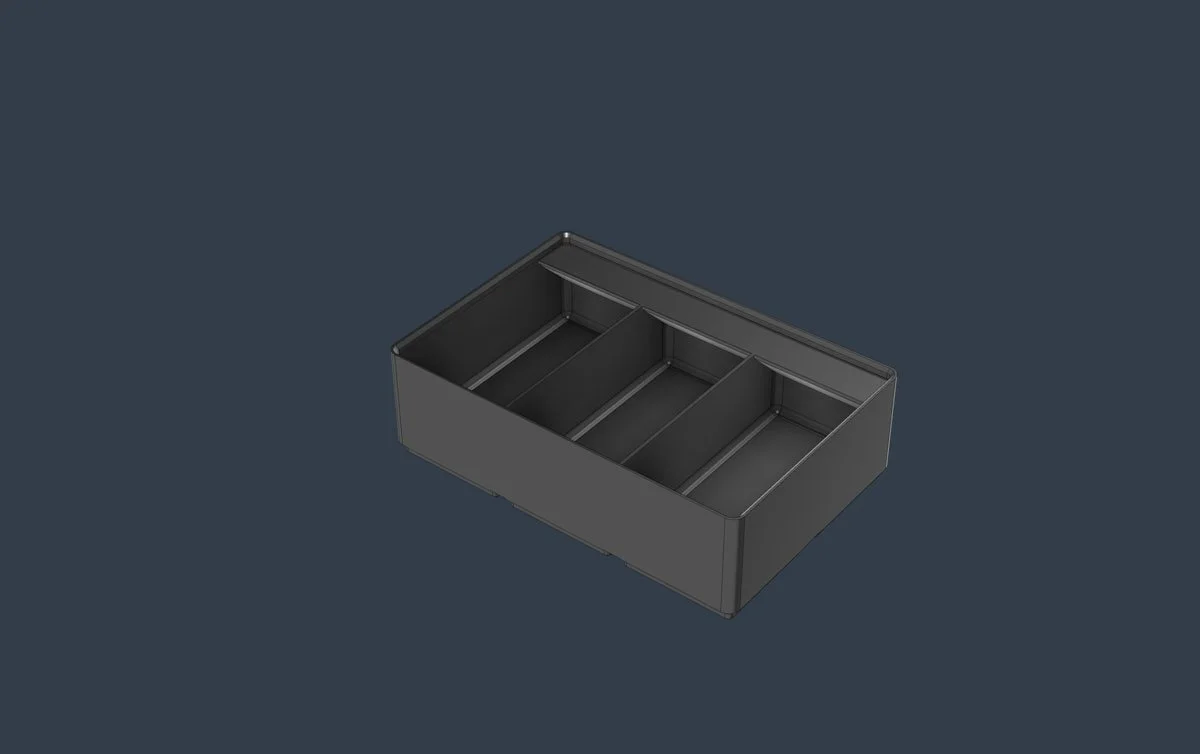
Woodworking already teaches you to think in constraints. You learn to design around board width, sheet size, grain direction, timber movement, joinery, strength, available tools, cost, and finish. You also learn that a good design is not just about how something looks. It has to work. It has to be buildable. It has to suit the material.
That part of 3D printing feels surprisingly familiar.
The material is different, the process is different, and the terminology is different, but the mindset is not completely foreign. I still find myself asking the same basic questions:
What problem am I trying to solve?
Who is this for, and what do they actually need?
How strong does this need to be?
What material makes sense?
How will this be used?
Can it be made cleanly and repeatably?
Is the extra complexity worth it?
Those are woodworking questions as much as they are 3D printing questions.
The difference is that I now have a new set of rules to learn.
A new material means new rules
In woodworking, you think about grain direction. In 3D printing, you think about layer direction.
In woodworking, thickness is often determined by the material you have available. In 3D printing, wall thickness is a design choice that affects strength, flexibility, print time, and material use.
In woodworking, you might think about joinery, screws, glue, and mechanical strength. With 3D printing, you start thinking about infill, perimeters, overhangs, bridging, tolerances, nozzle size, and print orientation.
It is still construction, but it is a very different kind of construction.
One of the biggest reminders for me has been that “plastic” is not one thing. Saying something is made from plastic is about as vague as saying something is made from wood. PETG, PLA, PLA Plus, matte PLA, and other materials all behave differently. Some are more flexible. Some look better. Some are easier to print. Some may need thicker walls or different design choices to make sense in use.
That is where the learning curve becomes interesting.
It is not enough to draw a shape and print it. The shape has to suit the material and the process.
That is very similar to woodworking.
A design that makes sense in plywood may not make sense in solid timber. A detail that looks elegant on screen might be weak, difficult to build, or wasteful in the real world. 3D printing has its own version of that lesson. A part that looks good in CAD might be awkward to print, too flexible, too slow, too weak in the wrong direction, or simply not worth the material.
CAD changes the experience completely
The part that has made 3D printing more exciting for me is CAD.
There are thousands of designs available online, and that is one of the strengths of the 3D printing world. But I do not want to be completely dependent on other people’s files. I want to be able to solve my own problems and develop my own ideas.
That is where the skill I learned for woodworking has become useful in a new way.
CAD turns the printer from a machine that prints other people’s solutions into a tool that can help me develop my own.
This has been especially interesting while thinking about workshop storage, Gridfinity-style organisers, small jigs, desktop organisers, and practical parts that solve very specific problems. I am still very much learning. I do not want to pretend that I have it all figured out. But the exciting part is that the design process feels open-ended.
The printer gives me a way to test ideas quickly.
CAD gives me a way to shape those ideas.
Woodworking gives me a foundation for thinking about function, strength, proportion, and real-world use.
Together, those three things start to feel very useful.
Still learning, still testing
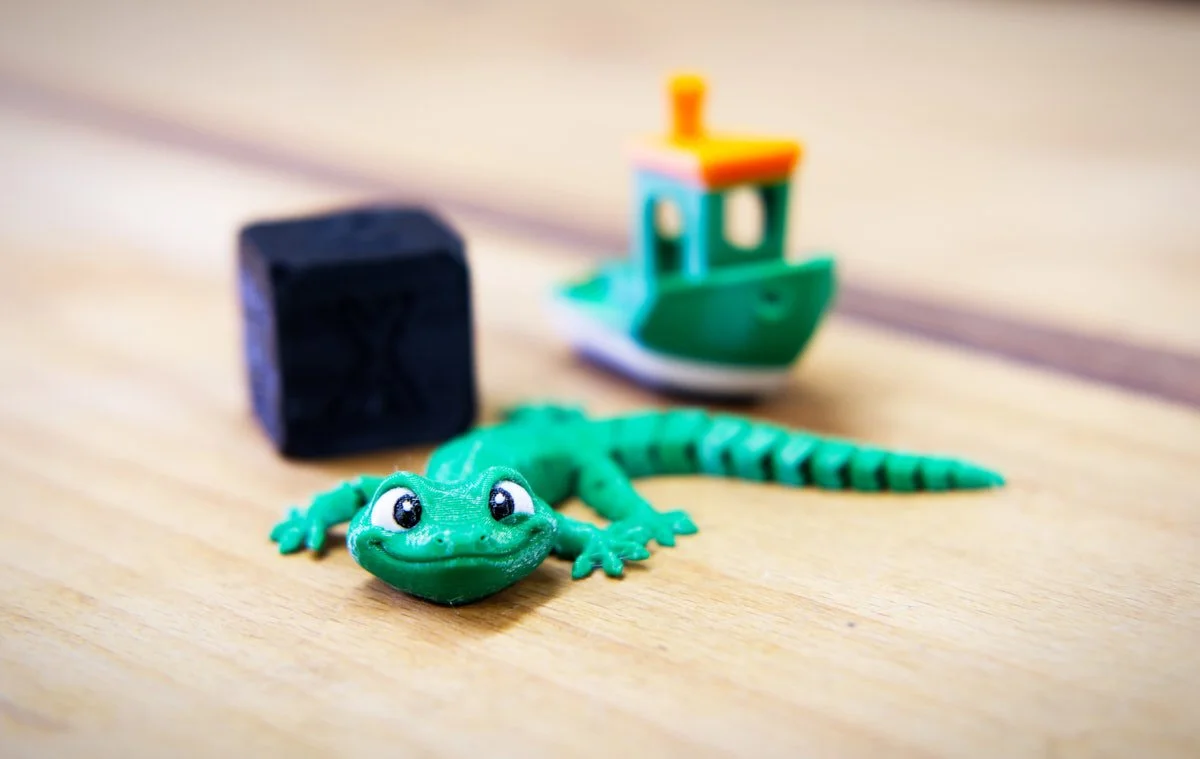
Most of my printing time so far has not gone into finished products.
It has gone into learning.
Calibration tests are not exciting, but they matter. Temperature towers, flow tests, dimensional checks, and practical test pieces all help build a better understanding of the machine. I have also spent time learning how different materials behave, how slicer settings affect the finished part, and how small design decisions can have a big effect on print quality and strength.
That process feels very familiar from the workshop.
No woodworker gets better by only building perfect finished pieces. You learn by sharpening, testing, making mistakes, adjusting setups, and slowly understanding how the tools and materials behave. 3D printing seems to work the same way.
There is a temptation to see it as automatic. Send the file, wait a few hours, collect the part. But in practice, there is still a lot of judgment involved. The machine can do the work, but it does not make the design decisions for you.
It also does not remove the need for testing.
A printed part might look right and still need adjustment. A bin might feel too flexible. A bracket might need more wall thickness. A small detail might be awkward to print. A part might work well enough for personal use but not yet be something I would feel comfortable selling or recommending.
That distinction matters.
There is a difference between making something useful for yourself and developing something properly for someone else.
Serving more than one kind of need
One of the more interesting possibilities with 3D printing is that it may allow the same design skills I use in the workshop to serve a wider range of people.
Not everyone needs a woodworking plan, a cabinet, a jig, or a piece of furniture. But many people do need small, practical, well-considered objects that make a workspace, hobby, home, or daily routine work better.
That is where this starts to feel bigger than just another workshop toy.
A printer can produce workshop organisers, Gridfinity-style storage, desktop accessories, small custom fittings, jigs, brackets, holders, and all sorts of practical objects. But the important part is not just that these things can be printed. The important part is whether they are designed around a real need.
That is the part I keep coming back to.
Good design should serve someone.
Whether the material is plywood, hardwood, MDF, or printed plastic, the starting point should still be the same: what does this person need, and how can the design make that easier, neater, stronger, more useful, or more enjoyable?
For PlyCreations, that feels like a natural extension rather than a completely separate direction. Woodworking is still the foundation, but the same design thinking may be useful beyond traditional woodworking.
More ideas than build volume
At the moment, the bottleneck is not ideas.
The bottleneck is time, testing, and a 300 x 300 x 300 mm build volume.
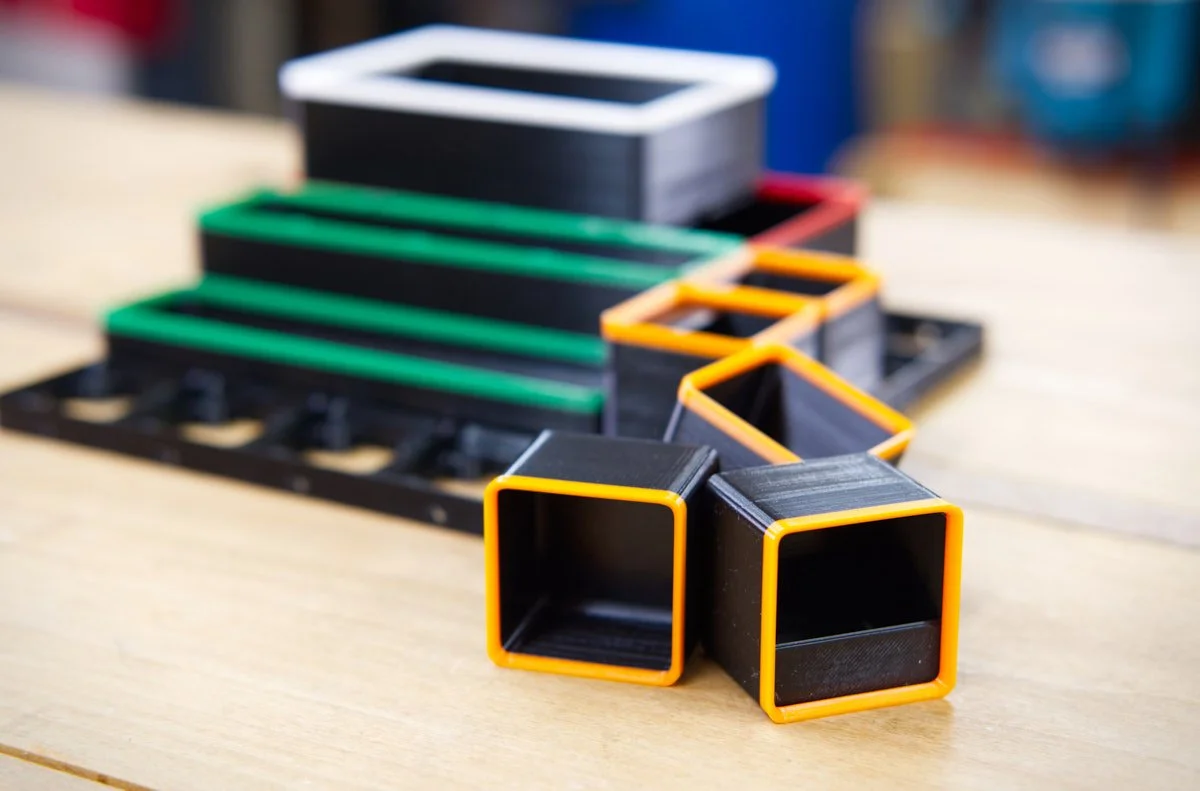
I have more ideas than the printer can keep up with. Workshop storage ideas, Gridfinity-style solutions, small organisers, practical jigs, product concepts, and things that may or may not survive the testing stage. Some ideas will probably go nowhere. Some will need several versions. Some may turn into useful products. Some may simply teach me what not to do next time.
And thankfully, the printer can work while I sleep.
That part still feels slightly strange coming from woodworking. In the wood shop, I am usually the one making the cut, holding the tool, sanding or planing the part, or assembling the piece. With 3D printing, the design work happens upfront, and then the machine quietly builds the part layer by layer and it does take its time doing that!
But that does not make the design less important.
If anything, it makes the design more important.
The printer will faithfully make what you ask it to make. The challenge is learning how to ask for the right thing.
A new job for an old skill
I learned CAD to become better at woodworking.
I wanted to design better furniture, understand my projects more clearly, and make smarter decisions before cutting material. That is still valuable. But 3D printing has given that skill a new job.
It has opened up a new material, a new process, and a new set of design problems to solve.
I am still at the beginning of that learning curve. There is a lot I do not know yet, and I expect plenty of failed prints, weak parts, bad assumptions, and redesigns along the way. But that is also what makes it interesting.
The core lesson so far is simple:
The tool has changed, but the design thinking still matters.
Whether I am working with wood or printed plastic, the goal is not just to make something. The goal is to make something useful, considered, and suited to the person who needs it.
That feels like a direction worth exploring.
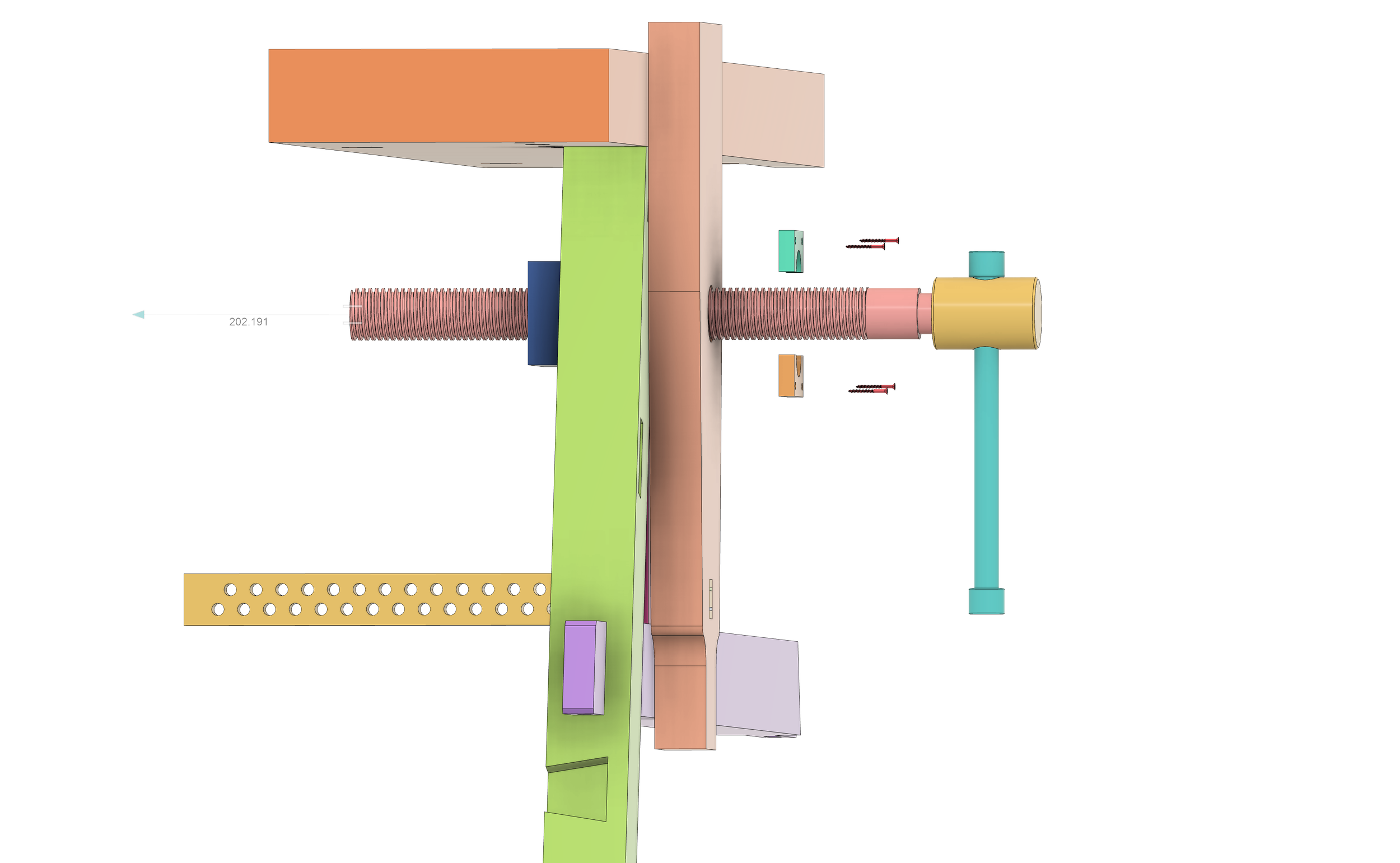
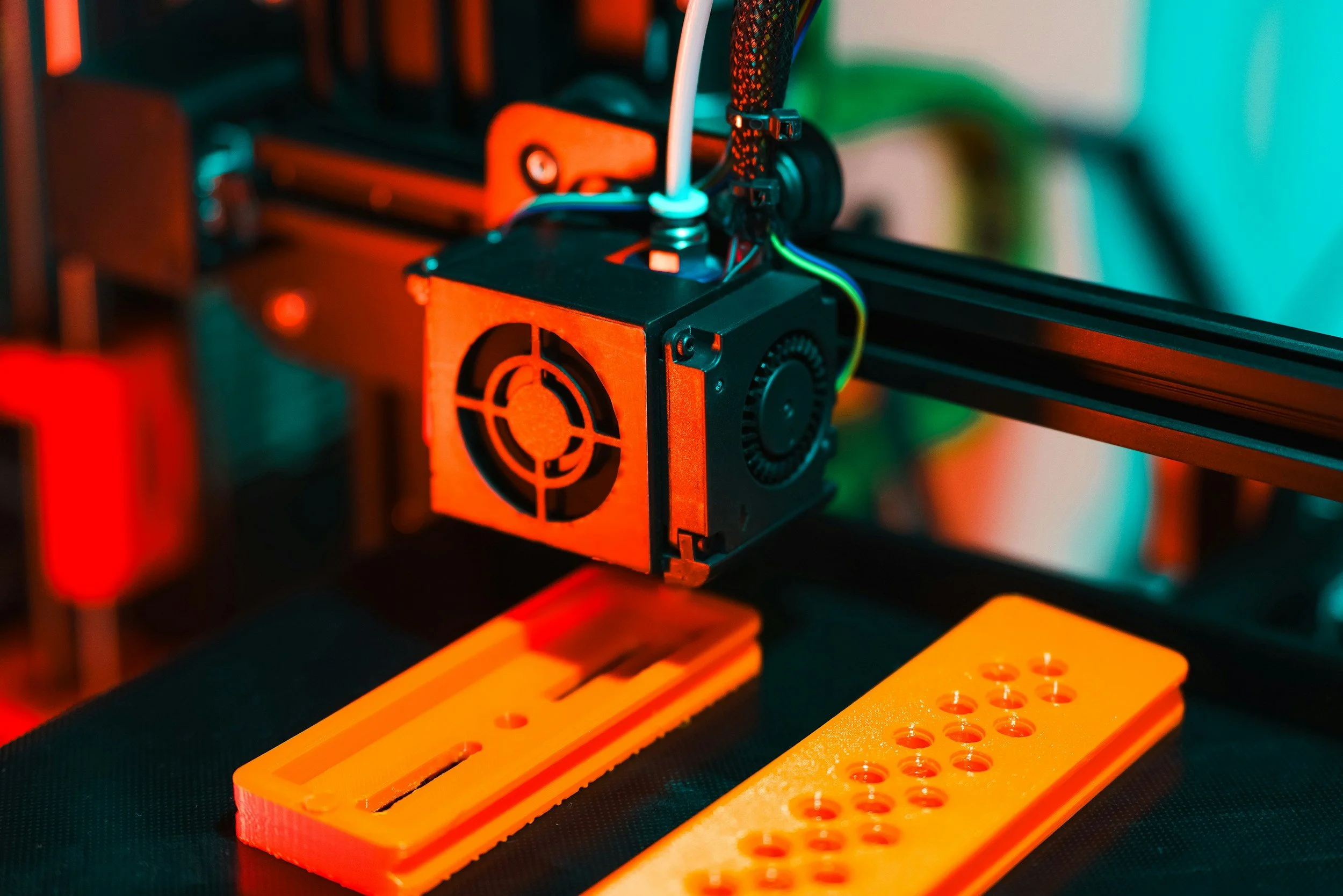
What does it take to turn an idea into something that actually works? I share what 3D printing is teaching me about prototyping, from adapting designs and testing small parts to choosing materials, asking for help and staying organised.