
There is a bandwagon screaming its way through the woodworking community, and I am seriously considering jumping aboard.
I love doing research, and over the past few months I have disappeared down more 3D-printing rabbit holes than I care to admit. So many, in fact, that I am surprised I haven’t been reported by more than a few rabbits for invasion of privacy.
I am seriously considering boarding the wagon the next time it passes, and these are the reasons why.
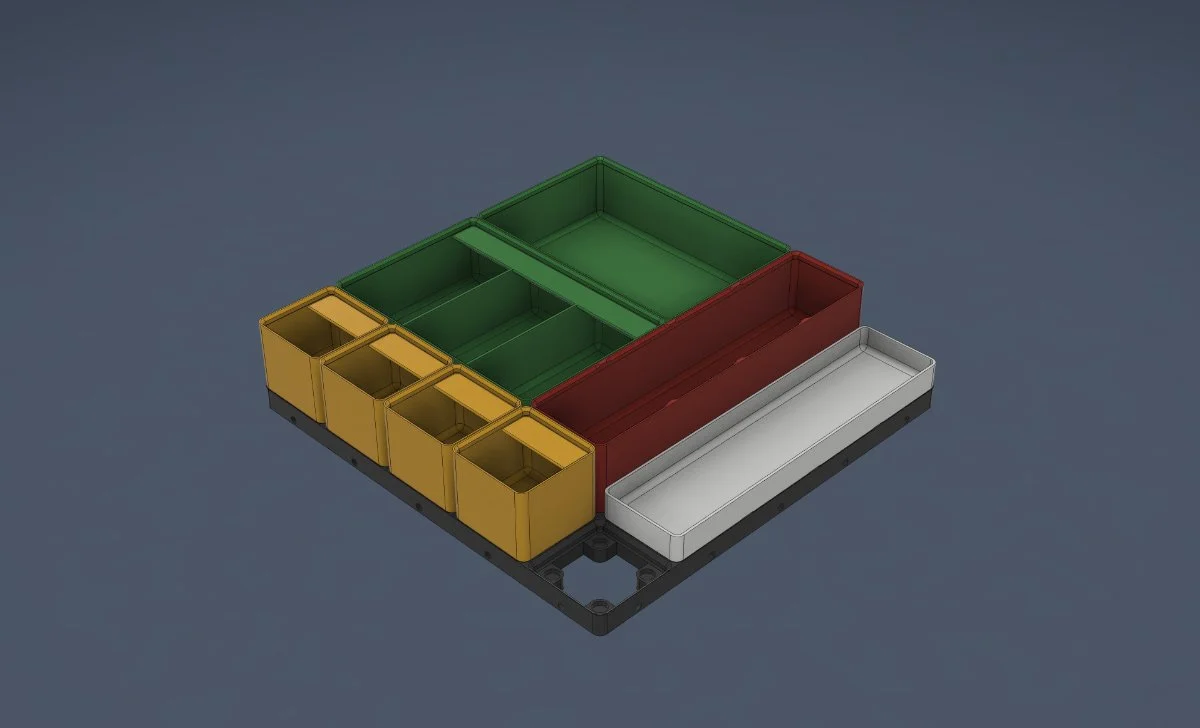
Top-Class Workshop Storage
If you have spent any time looking at the 3D-printed workshop storage solutions available and haven’t noticed the enormous number of designs you can download and print, you have probably been living under the same rock I have.
Among all the noise, a few systems stand out. The two that look particularly interesting to me are Gridfinity and Multibuild.
Gridfinity caught my attention first because it is completely open-source, and the number of STL files available to download and print is staggering.
What I find particularly useful is that people far cleverer than I am have created tools that allow you to design components around your own specific needs.
One solution I have been experimenting with is an add-in that works inside Fusion 360. Once I had installed it and started playing around, I had four or five versions of a storage solution within a couple of hours, each designed for a particular purpose.
This could become an addiction.
The second system is Multibuild. Although it can be used for horizontal storage like Gridfinity, it really excels at vertical workshop storage, with a mind-numbing number of configurations and storage options.
The system is almost too modular. I can easily imagine suffering from decision paralysis while trying to decide what to include on a Multibuild wall.
It also differs from Gridfinity because it is not completely open-source. To download and print many of its designs, you need to become a paying member of the community.
Multibuild also offers a commercial licence for people who want to print and sell products based on the system, but I will come back to that later.
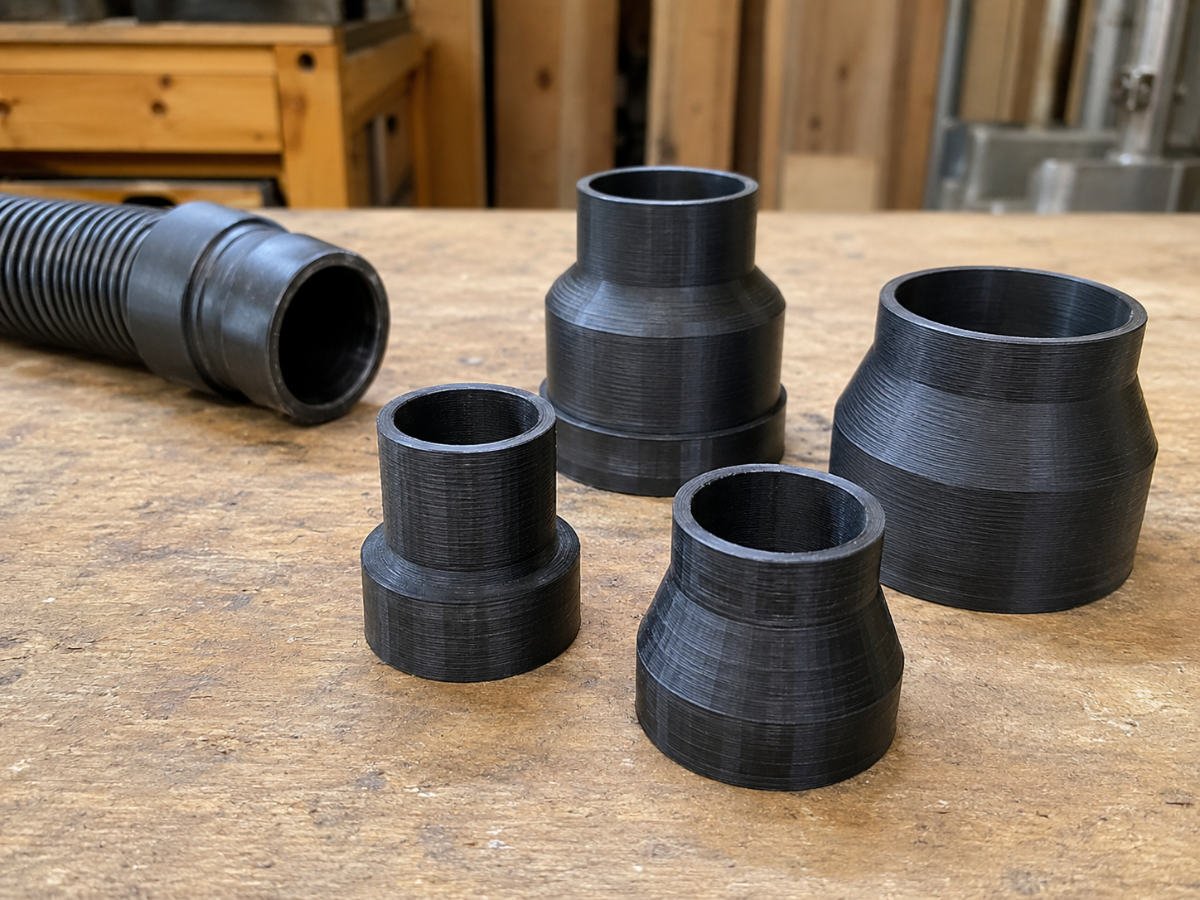
Jigs and Workshop Helpers
3D-printed storage has value well beyond woodworking, but when it comes to solutions specifically designed for the wood shop, there is no shortage of useful ideas.
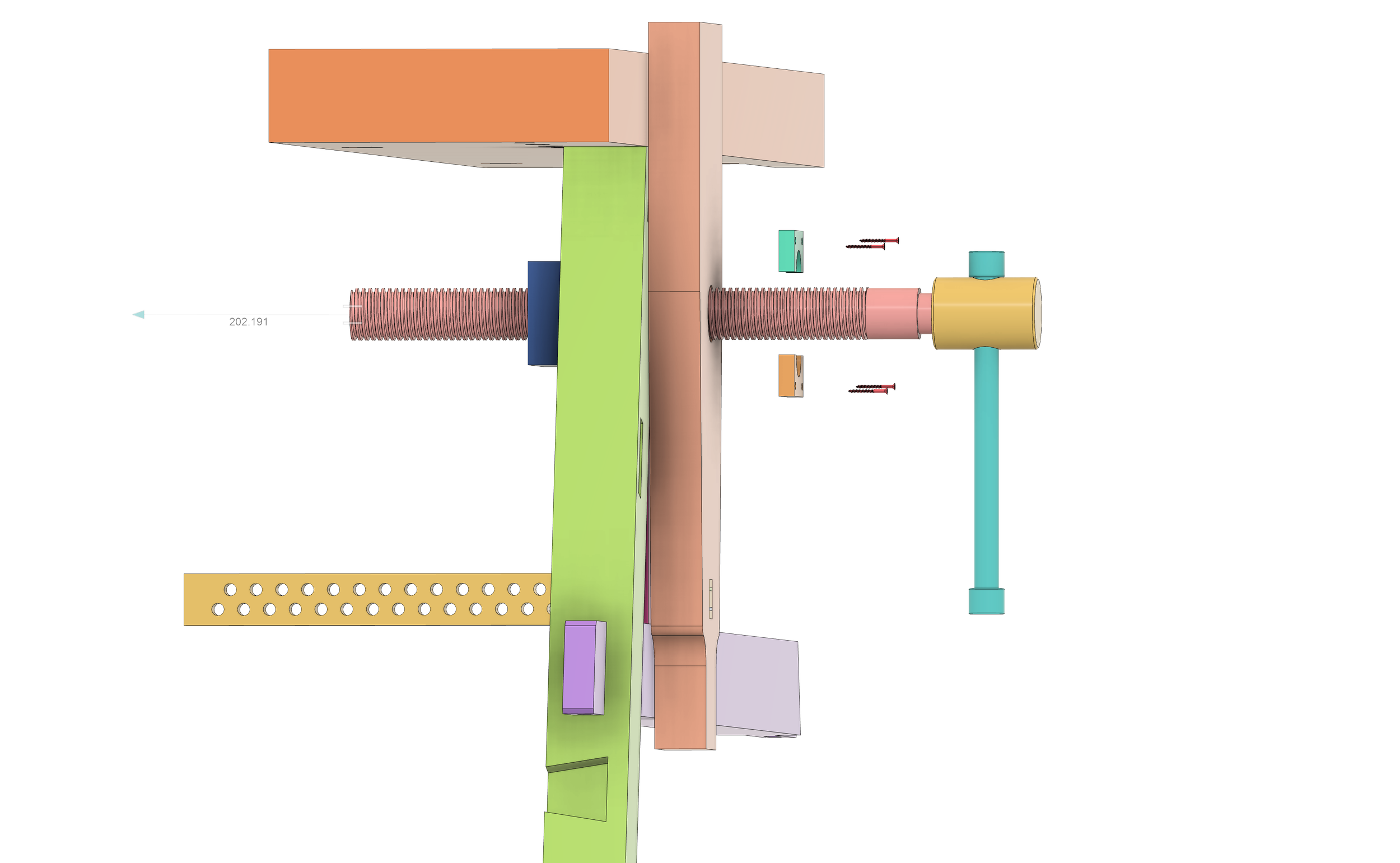
There are downloadable woodworking jigs and workshop helpers for almost every conceivable purpose. A few examples include:
Painting and finishing triangles
Dog-hole stops and fixtures
Right-angle clamping squares
Router templates
Jig components such as knobs, sliders and handles
Cordless tool and battery mounts
Clamp holders
Custom vacuum and dust-extraction adapters
The custom adapters immediately caught my attention. As I write this, I can think of at least four machines in my workshop that would be easier and more pleasant to use with dedicated vacuum-hose adapters.
I recently found a designer on one of the 3D-model download platforms who has pages of adapter designs available. You simply download the appropriate STL file and print the adapter yourself.
And that list does not even include my own ideas for bespoke workshop products: pen-blank organisers, carving-tool storage, modular push blocks and even a soft cover for one particular corner of my bandsaw that always seems to get in the way of my head.
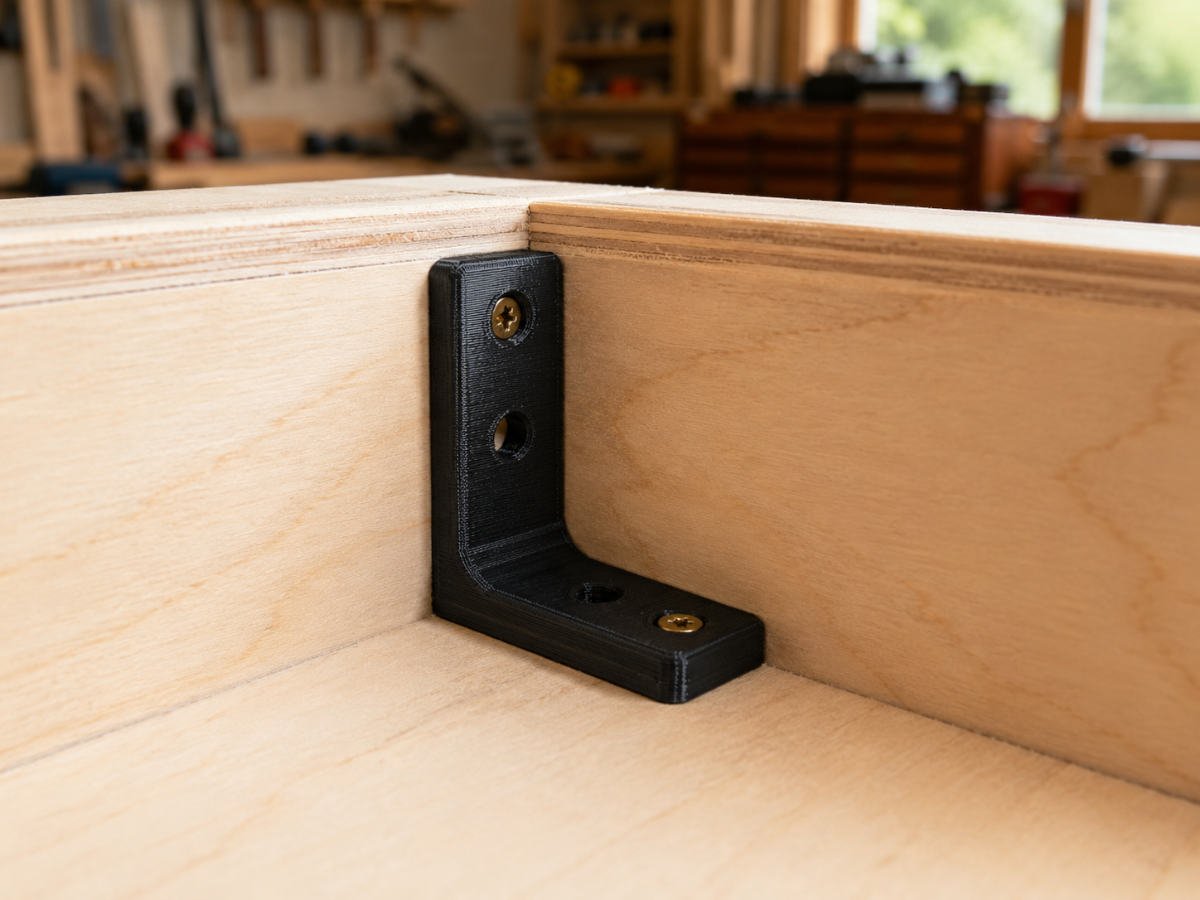
3D-Printed Furniture Parts
This will probably be the most controversial use of a 3D printer in the wood shop.
I enjoy making furniture from plywood, and that is where my business originally began. Now imagine combining plywood construction with 3D-printed furniture parts to create more modern or contemporary pieces.
Honestly, this is one of the areas I am most curious about.
There are, however, several challenges. Structural furniture components would likely need to be printed using specialist engineering filaments to provide sufficient strength and long-term stability.
These materials are generally more difficult to print and may require capabilities that are not available on every 3D printer.
Even so, I think there is potential here.
The important question may not be whether a piece of furniture includes a printed component, but whether that component supports the design or simply replaces the craftsmanship.
Commercial Potential
Being entrepreneurially minded, any equipment that enters my workshop—especially equipment representing a significant investment—needs to earn its keep.
In other words, buying a 3D printer needs to make business sense.
This brings us back to workshop storage. I have received permission from the developer of a Gridfinity generator to use the app to design and sell Gridfinity-based storage products. As mentioned the developers behind Multibuild also offer a commercial licence for people who want to manufacture and sell products based on their system, so potential volumes would need to offset the cost of entry.
These options could allow me to offer basic workshop storage starter kits as well as bespoke storage solutions through my website.
The larger opportunity, however, may be making my own workshop designs available to other woodworkers. These could be offered either as finished physical products or as downloadable STL files that customers can print themselves.
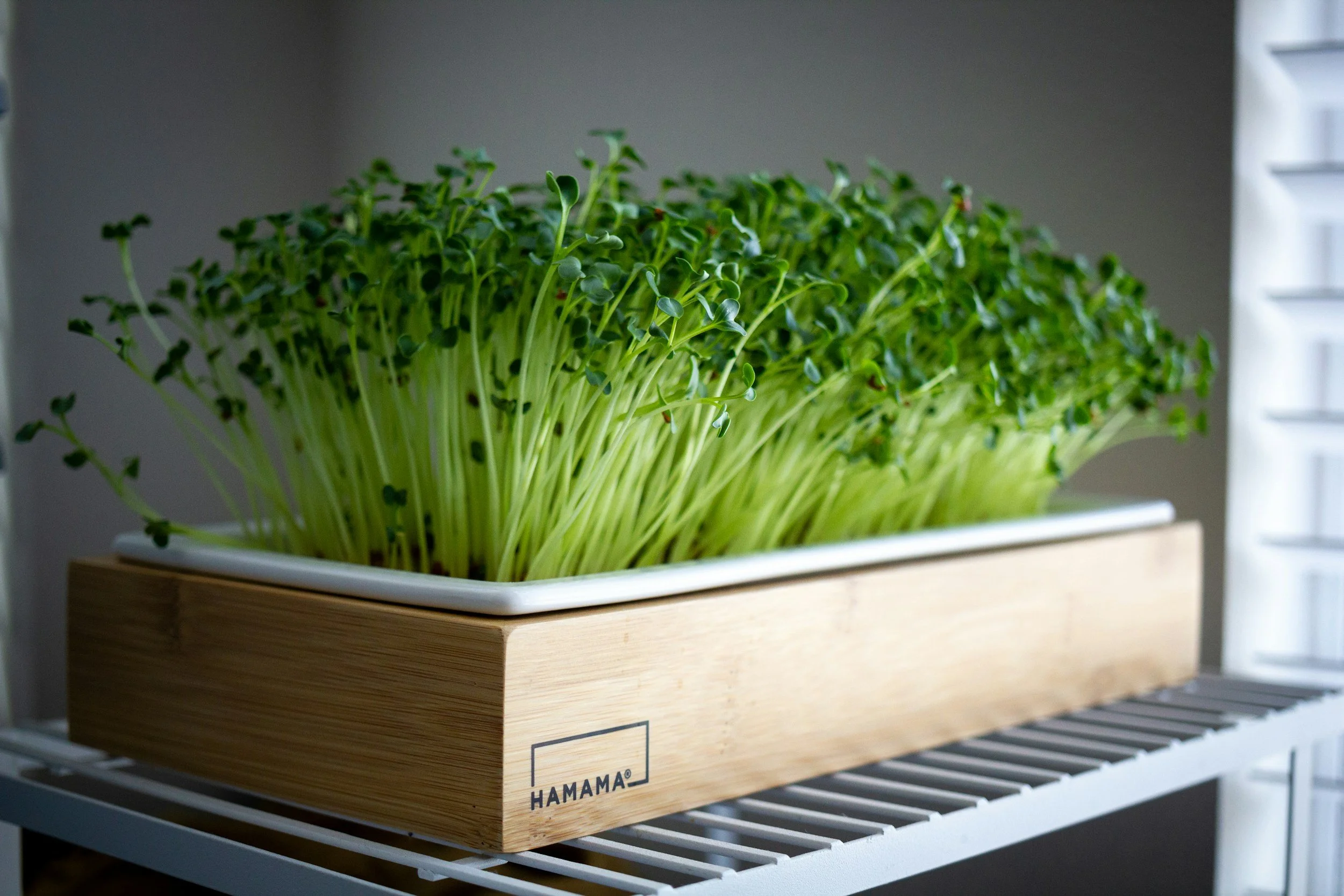
Fun
I would not be completely honest if I tried to convince you that this was all about business.
The opportunity to design and make even more cool stuff sounds, well, incredibly cool.
I am already thinking about hydroponic and microgreen kits that I could design and print for my wife and sister.
So, would bringing a 3D printer into my workshop be a betrayal of the craft?
I don’t think so.
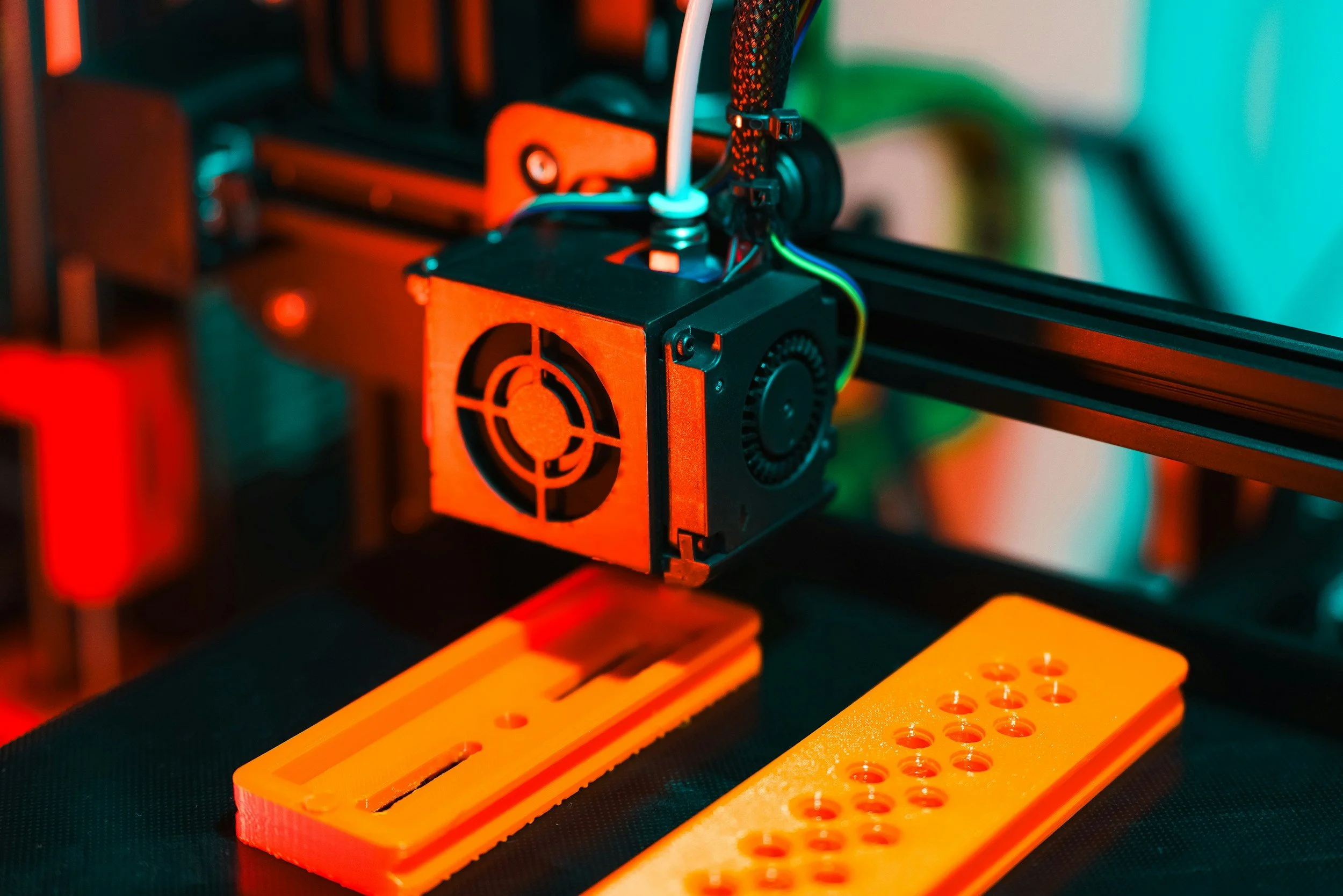
A 3D printer will not replace my hand tools, machinery or woodworking skills. What it could do is help me organise the workshop, solve small but irritating problems, create better jigs and experiment with ideas that would otherwise be difficult to produce.
So much so that I am expecting to take delivery of a printer by the end of the week.
All I need to do now is find somewhere to put it.
What does it take to turn an idea into something that actually works? I share what 3D printing is teaching me about prototyping, from adapting designs and testing small parts to choosing materials, asking for help and staying organised.