
Is a Low Angle Jack Plane Good for Beginners?
Low angle jack planes are often marketed as the one hand plane that can do almost everything in the workshop.
I’m here to tell you that this is only partly true.
A low angle jack plane is a beautiful and very capable tool. I own and use bevel-up planes in my own workshop, and they absolutely have their place. But if you are just starting out with hand planes, I would not recommend a low angle jack as your first hand plane.
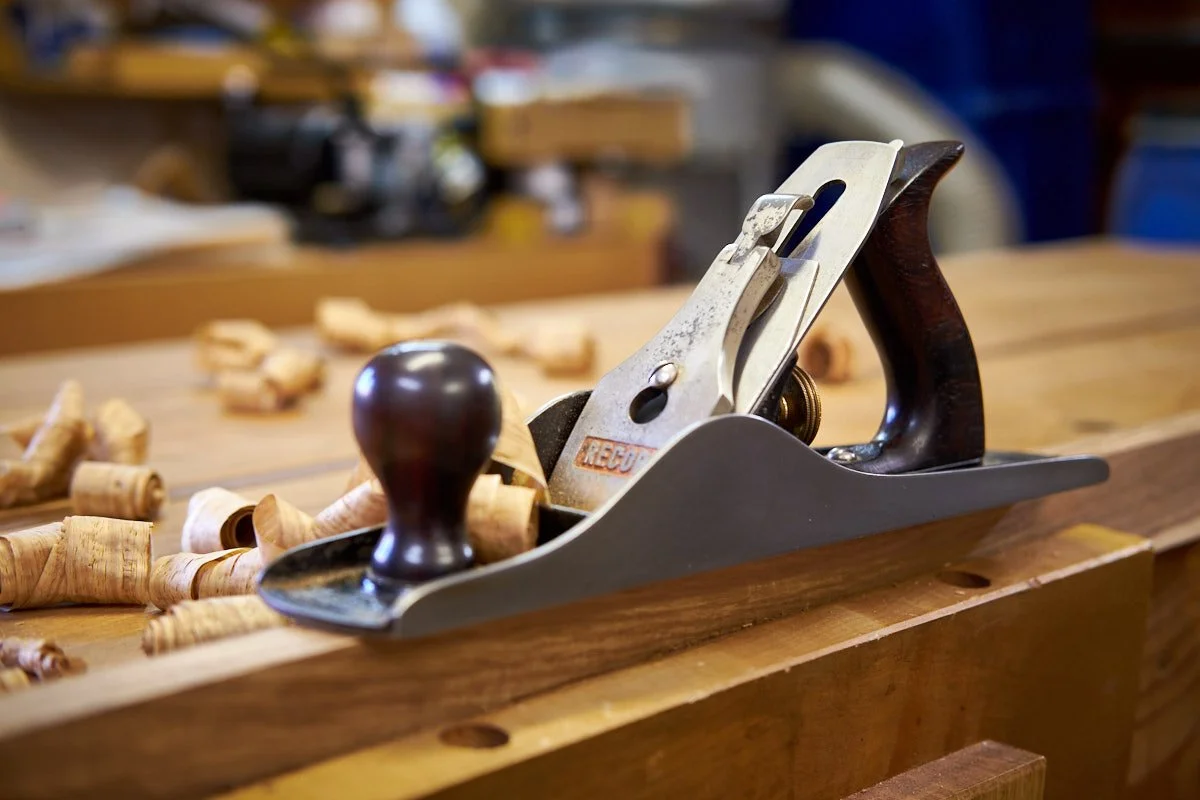
For a beginner, I think a standard Bailey pattern No. 5 jack plane is usually the better choice. It is easier to understand, easier to set up, more forgiving in use, and better suited to learning the basic skills that make hand planes work properly.
That does not mean a low angle jack plane is a bad tool.
Far from it.
It simply means that the reasons it is great are not always the same reasons that make a hand plane beginner-friendly.
Let me explain.
Why Low Angle Jack Planes Are So Popular
Low angle jack planes have developed a reputation as the “do-it-all” hand plane.
And to be fair, it is easy to see why.
They are beautifully made, feel solid in the hand, and can perform very well across a wide range of tasks. A good low angle jack plane can trim end grain, work on a shooting board, take clean finishing cuts in the right conditions, and handle some general stock preparation.
That makes it sound like the perfect first hand plane.
The problem is that versatility on paper does not always translate into simplicity at the bench.
When you are new to hand planes, you are also learning how grain direction works, how sharp the blade needs to be, how deep a cut should be, how to read tear-out, and how the tool should feel when it is working properly.
That is already a lot to deal with.
Adding the quirks of a bevel-up low angle jack plane into that learning process can make things harder than they need to be.
The Problem With Bevel-Up Planes for Beginners
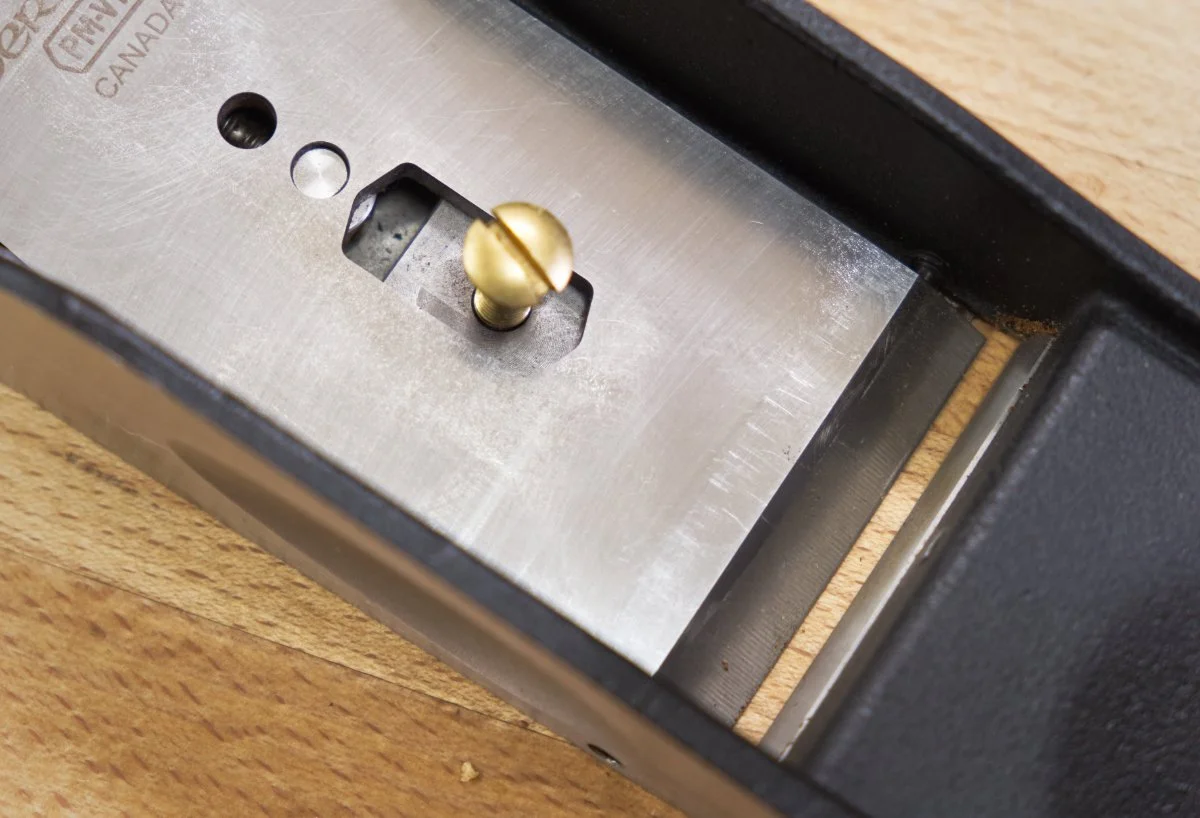
A low angle jack plane is a bevel-up hand plane.
This means the bevel of the blade faces upward when the blade is installed in the plane. This is different from a standard Bailey pattern bench plane, where the blade is installed bevel-down and used with a chip breaker.
That difference matters.
In my experience, the bevel-up design makes tear-out control less straightforward for beginners, especially compared with a standard bevel-down plane fitted with a chip breaker.
With a bevel-down Bailey pattern plane, the chip breaker helps control the shaving as it comes off the wood. When the blade is sharp and the chip breaker is set correctly, you have a very useful setup for reducing tear-out.
A low angle jack plane does not work in quite the same way.
Out of the box, many low angle jack planes are set up with a relatively low cutting angle. That can be a major advantage in some situations, especially when working end grain. But on difficult long grain, that same low cutting angle can get under the grain and lift the fibres before they are properly cut.
That is when tear-out starts.
And for a beginner, tear-out can be incredibly frustrating because it is not always obvious what caused it.
Was the blade dull? Was the cut too deep? Was the grain reversing? Was the mouth too open? Was the angle wrong?
With a standard No. 5 jack plane, I think the learning curve is a little more forgiving.
Cutting Angle Can Get Complicated
One of the big selling points of low angle jack planes is that you can change the cutting angle by changing the blade bevel. For example, my Veritas low angle jack has a 12° bed angle. If the blade has a 25° bevel, the final cutting angle is 37°.
That is much lower than a standard Bailey pattern plane, where the frog is usually bedded at 45°. In that case, the cutting angle is determined by the frog, not by the bevel angle of the blade.
This is where the low angle jack plane starts to sound very clever.
Need a lower angle for end grain? Use a standard 25° bevel.
Need a higher angle for difficult grain? Sharpen a blade with a steeper bevel.
That sounds useful, and it can be. But for a beginner, it also adds another layer of complication. If you want different cutting angles, you either need to reshape and sharpen the blade every time you want to change the angle, or you need to buy additional blades and keep them set up for different jobs.
That means more sharpening, more setup, more decision-making, and more expense.
A standard Bailey pattern No. 5 jack plane avoids most of this. It does not need to be clever. It simply does what a jack plane is supposed to do.
Sometimes that is exactly what a beginner needs.
Setup and Adjustment Can Be Fiddly
The next issue is setup.
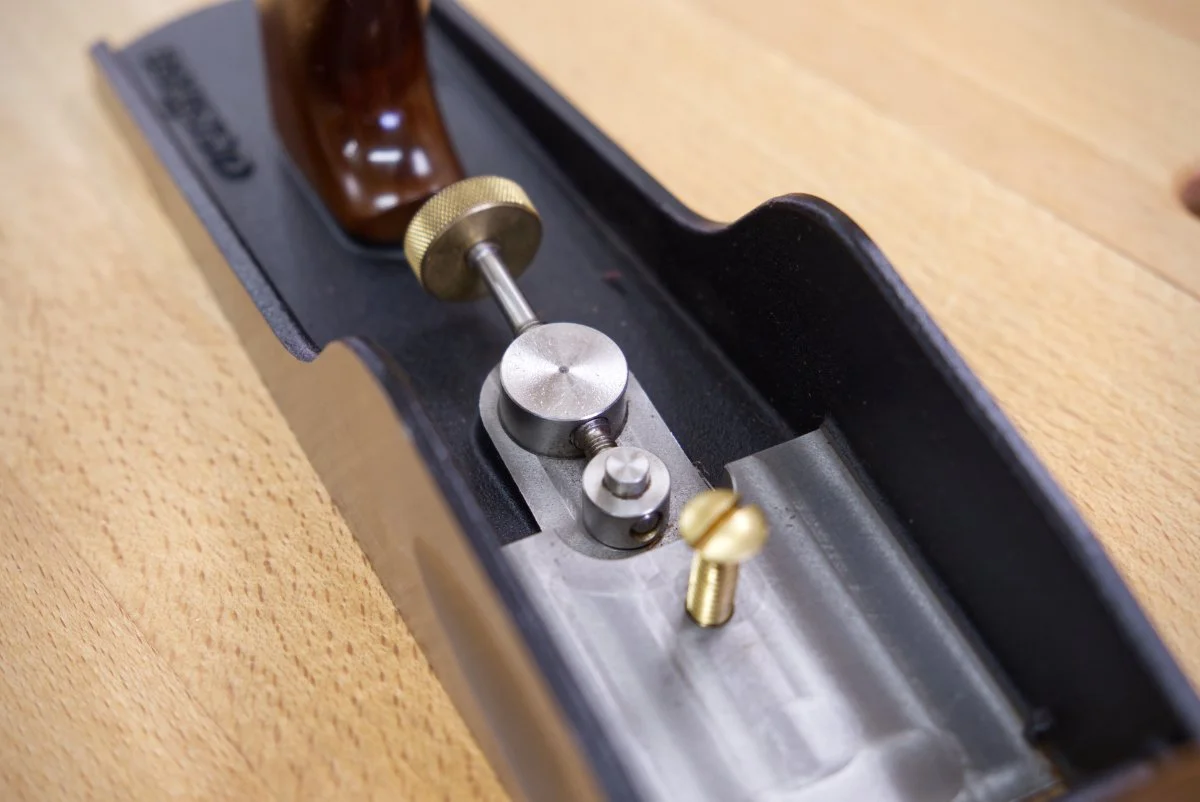
Low angle jack planes can be a little fiddly to set, especially when it comes to getting the cutting edge of the blade parallel with the sole.
On many low angle jack planes, the depth and lateral adjustment are controlled through the same mechanism. The depth adjustment usually works well enough, but fine lateral adjustment can be tricky.
I often use a small Japanese blade-setting hammer to make the final tweaks because it is very easy to go too far left or right using the plane’s adjuster.
That is not the end of the world if you already know what you are looking for.
But if you are a beginner and you are still trying to figure out why the plane is taking a heavier shaving on one side than the other, this can become frustrating very quickly.
Some low angle jack planes include small set screws on either side of the blade near the mouth of the plane. These help guide the blade and keep it centred, but they are also another thing to understand, set, and monitor.
When you are learning to use a hand plane, your focus should be on the wood, the shaving, the sound, and the feel of the cut. You should not have to spend half your time babysitting the plane.
This is another reason I think a plain No. 5 jack plane is a better first hand plane.
The Handle and Adjustment Position
This next point is more personal, but I think it matters.
I “grew up” using Bailey pattern hand planes, so I am used to the four-finger grip offered by their handles. With that grip, my index finger naturally sits on or near the frog.
That helps me steer the plane, and it also leaves my index finger free to adjust the depth of cut while I am working.
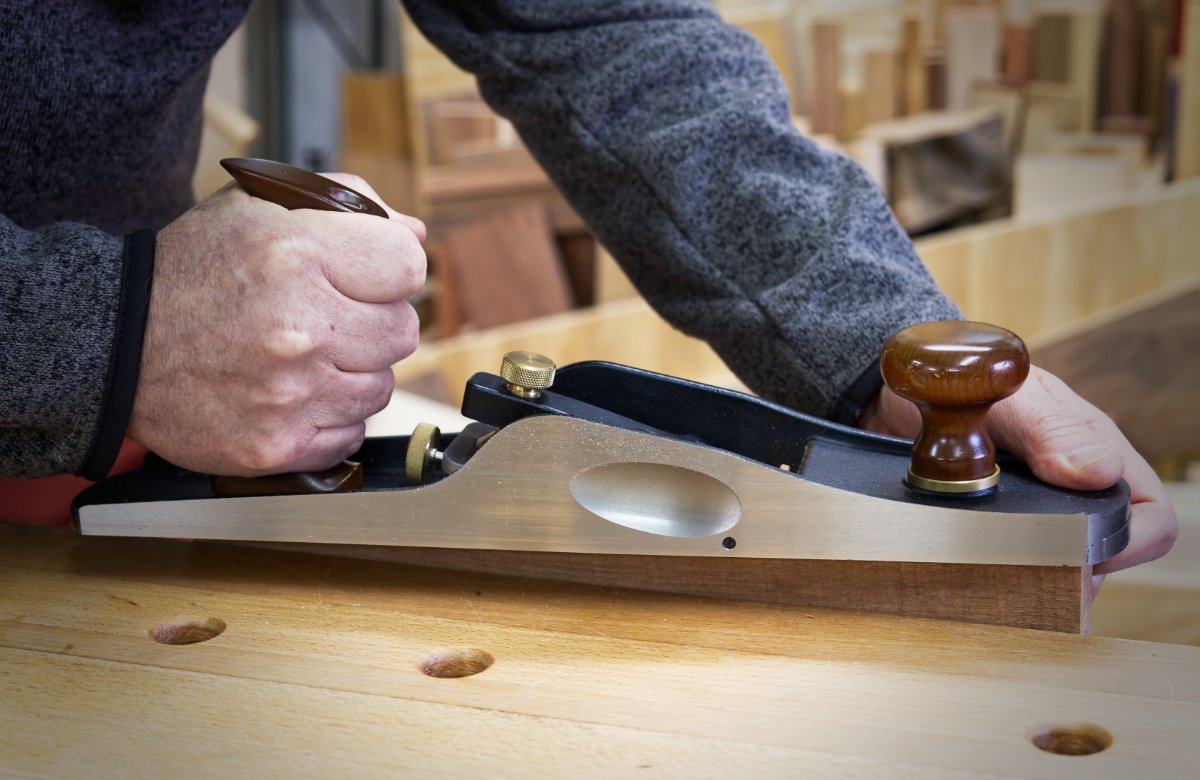
On a low angle jack plane, the handle usually encourages more of a full five-finger grip. For me, that makes steering feel less natural.
The bigger issue, though, is the position of the depth adjuster.
On my low angle jack, I struggle to easily reach the depth adjuster while holding the plane normally. If I want to change the depth of cut, I usually have to stop, let go of the handle, make the adjustment, and then carry on.
That may sound small, but when you are working at the bench and making constant fine adjustments, it interrupts the rhythm of the work.
For a beginner, it is one more thing getting between you and the skill you are trying to learn.
When a Low Angle Jack Plane Is Worth Owning
After all of that, you might think I dislike low angle jack planes.
I don’t.
In fact, I like them a lot.
The same bevel-up design that can make them more awkward for beginners also gives them one of their greatest strengths: they are excellent on end grain.
Any sharp plane iron can cut end grain, but a bevel-up low angle plane has a slicing action that makes it especially good at this job.
Whenever end grain is involved, my Veritas low angle jack or my Luban block plane are often the first planes I reach for. That could be anything from putting the final touches on an end grain butcher block to removing saw marks from the end of a tabletop.
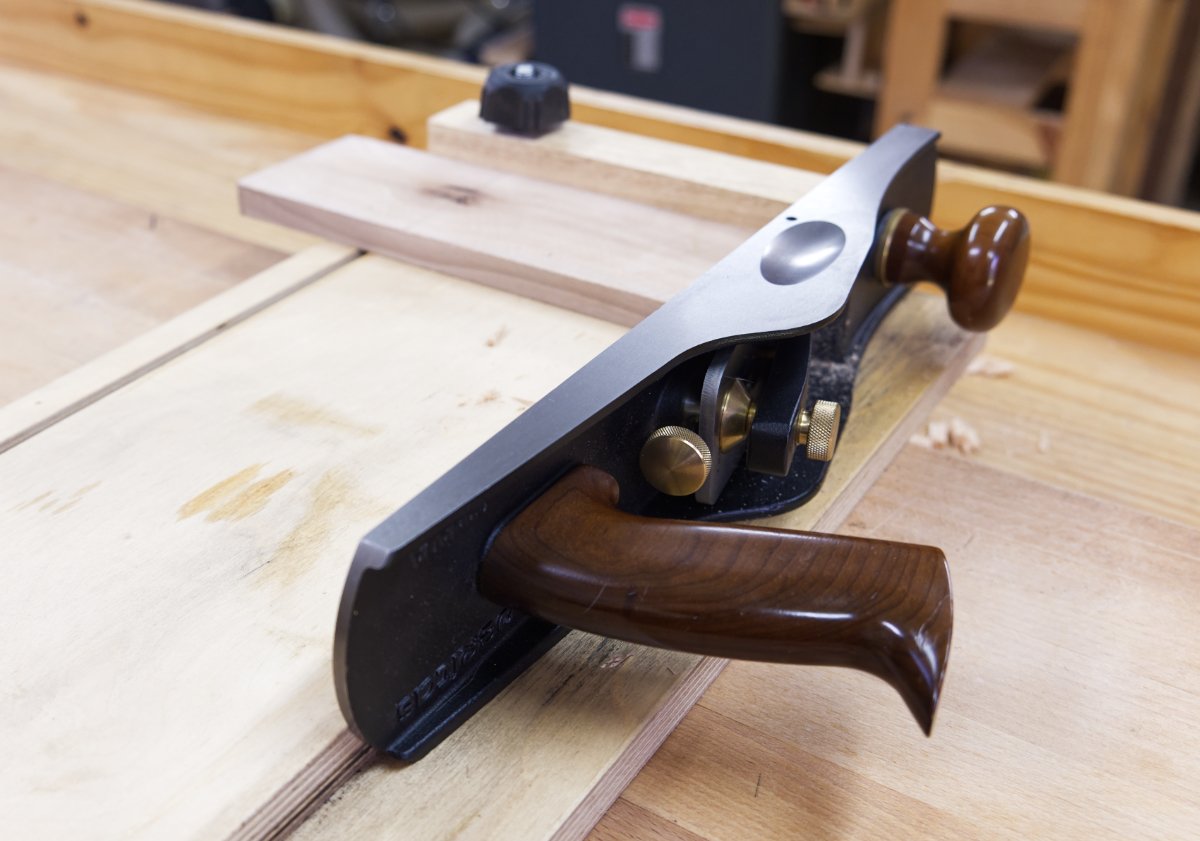
The low angle jack is also excellent on a shooting board.
In fact, I have yet to find a hand plane that performs better on the shooting board than my Veritas low angle jack. Veritas clearly knew exactly what they were doing when they designed their version.
This is where the low angle jack plane really shines.
Not necessarily as the first hand plane you buy, but as a specialised and very useful plane once you understand what it is good at.
My Recommendation for Beginners
If you are just starting your hand plane journey, I would not suggest buying a low angle jack plane as your first hand plane.
I would start with a standard Bailey pattern No. 5 jack plane.
A No. 5 jack plane will teach you the fundamentals more clearly. You will learn how to sharpen, set the chip breaker, adjust the depth of cut, control tear-out, read grain direction, and use a bench plane in a wide range of normal woodworking situations.
It is also a more forgiving tool while you are learning.
That matters.
A beginner does not need a hand plane that can theoretically do everything. A beginner needs a hand plane that makes the basics easier to understand.
Once you have those basics under control, a low angle jack plane becomes much easier to appreciate. At that point, you will understand why it works so well on end grain, why it is so good on a shooting board, and where it fits into the workshop.
So no, I would not write off the low angle jack plane.
It is a beautiful and extremely capable tool.
I just would not make it your first one.
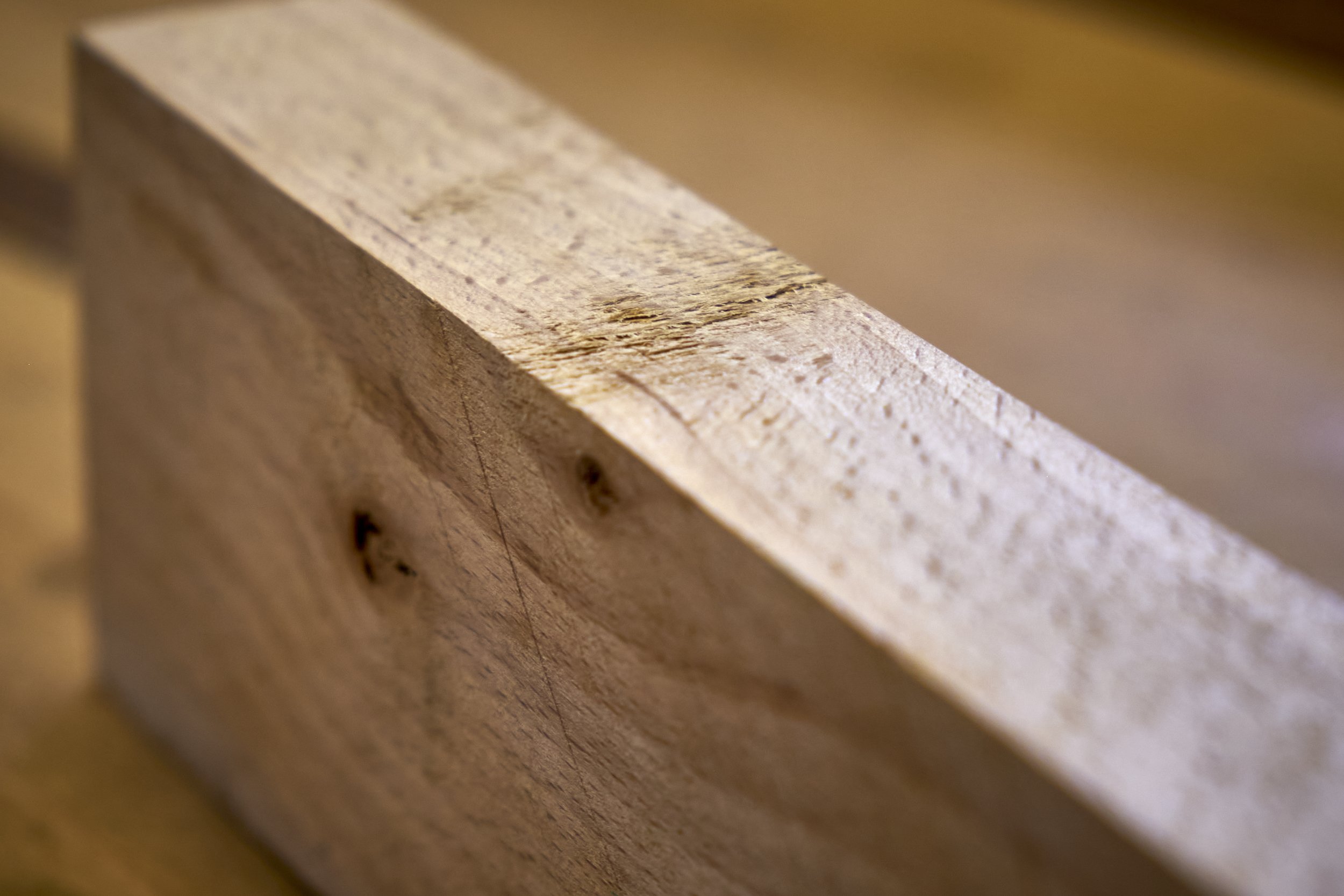
Tear-out is inevitable in woodworking. In this article, I explain why I prefer high angle planing, whether with a modified iron or a wooden hand plane, and how it fits into my workflow for managing difficult grain without constantly adjusting plane mouths.