
What Does It Taste Like?
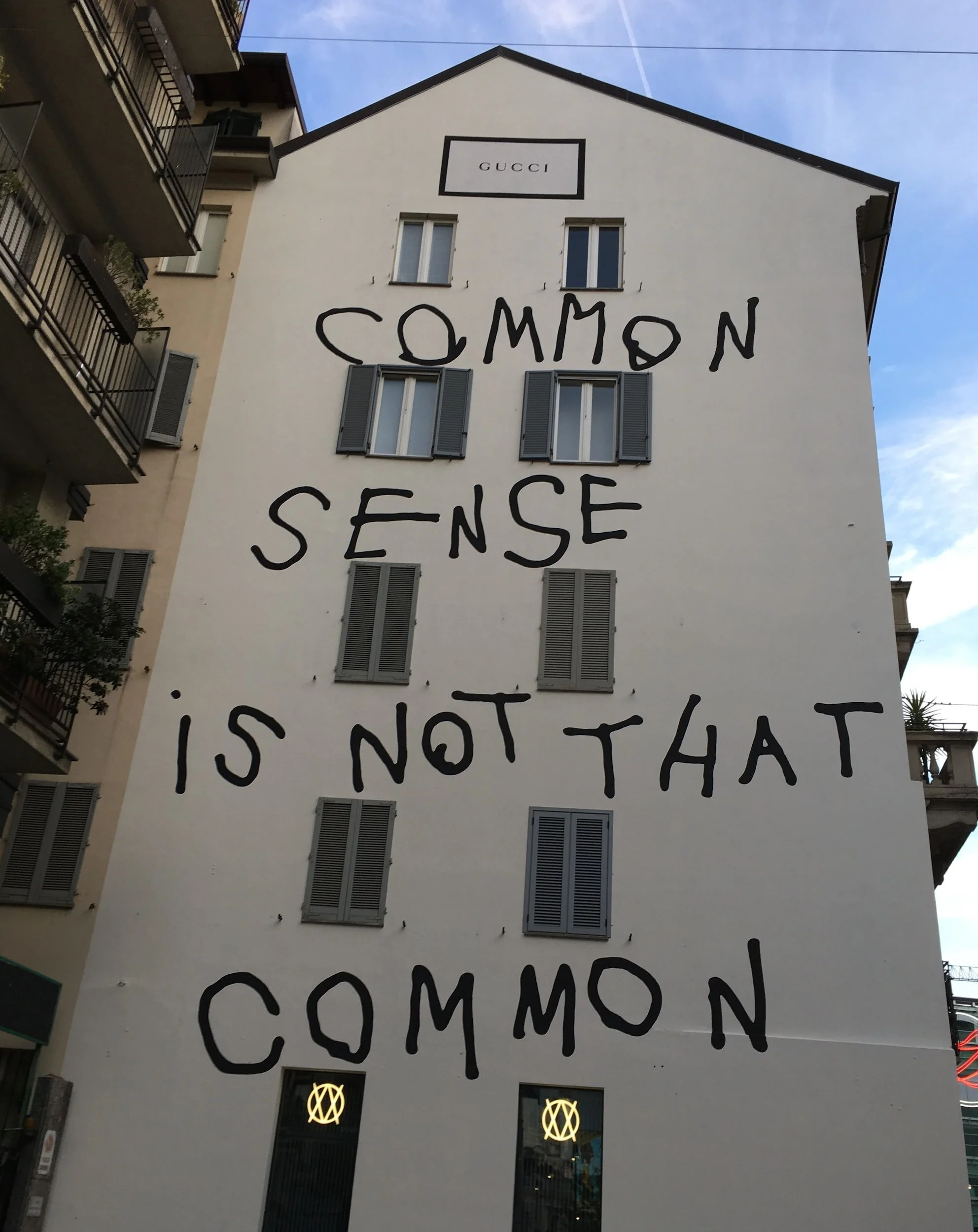
Using your senses in the workshop, and by sense I don’t mean common sense, although some would argue that it should be the most important one when surrounded by what could be potentially dangerous equipment in the workshop.
By senses I mean the five physical ones that the majority of us have access to, although some great makers out there may not have access to all. I’m talking about touch, smell, sound, taste and sight.
It has been nuts in the workshop over the last few weeks, mainly because I bit off more than I could chew - see taste - on delivery dates for customer projects and I’m not even going to get into falling behind on commitments I made to myself about this blog and website. But the nutsness has slowed down and I have had some time to reflect on happenings in the workshop over the past few weeks.
Anyway, it’s a cold, bright winters day here where we live at the southern tip of Africa and I am in a philosophical mood, so let me tell you more about what I’m trying to get at.
You may have been following along with our latest customer project, the garage storage unit or cupboard, that we have been writing about, over the last few weeks. If you have you would be happy to hear that we delivered it to a excited customer last week, you will be reading about the project for one or two posts more as my writing generally lags the actual project by a week or two but the project is complete. If you haven’t followed along please head over to our blog here to learn more.
Something happened as I was completing the final glue up of the carcass that got me thinking - always a dangerous pastime - and I would like to share my thoughts with you today.
In the glue up post I mentioned that I had some problems getting the last piece of the puzzle in place, which was the right panel and final part of the carcass. This was because of the thin back panel not wanting to go into its housing slot that I had cut into the right section, in spite of all the precautions I took before I started with this last step I still had some issues getting the panel seated and clamped.
Don’t get me wrong, the precautionary steps helped a lot and likely allowed me the margin to come to the realisation that I am about to share with you.
You see as I was coaxing the back panel into position and it didn’t want to enter the slot. I was banging the side panel with my hammer to force the ply sheet in place but it wouldn’t budge. Having a closer look at the area that was being held up I gave the back panel a slight tug on the “handle” I installed earlier for this exact purpose and as I did I heard a faint pop as the panel partially slipped into the slot. Realising that I was able to hear the panel seat itself into the first few hundredths of a mm into the slot I continued down the panel to the opposite end of the side panel, tapping and pulling while listening for the now familiar “pop” of the back panel seating into the slot as I went along. Upon reaching the other corner I had to do little more than put slight hand pressure on the corner to make the whole joint come together and with a relief I was able to take my time applying clamps where needed.
So what is the point of it all?
Well I came to the realisation that making may be more enjoyable the more of ourselves we bring to the process and that does mean that we bring our senses along for the ride. I am convinced that some who ply their trade as makers and really love what they do may already be doing so, knowing or otherwise and I am wondering how much of what we experience as tough days in the workshop may be because we are not fully there during the process.
Many people look up to makers and believe they live the perfect life by doing what they love but many miss the point that for many makers out there, what they are doing feels more like a job than living the dream and some may even lose sight of the amazing privilege it is to create.
Would becoming attentive of the full body experience of making go some way in rekindling the fire they experienced at the start of their journey?
I don’t know.
Let’s look at the five senses in turn and see if we can wake up some memories, shall we?

Touch
For me this one is likely the most used sense in my workshop.
I have a thing for hand planes and touch is possibly one of the most used “tools” when using my planes. Let’s start with sharpening. Remember feeling for that first burr when you learnt to sharpen a blade? Remember how pronounced it was and think about feeling for that same burr now and how horrified you would be if you felt such a large one on that expensive piece of steel you have in your hand now.
Touch is a crucial sense when setting wooden hand planes and if you ever have to watch me set one you will see me constantly check the blade position with my fingers in the mouth of the plane.
Not a user of hand planes?
Pay attention next time you sand a panel and then tell me that the feedback from touch isn’t telling you how that process is going.

Smell
Does that blade need sharpening or does the table saw need alignment? What’s that burning smell again?
Is that router bit spinning too fast?
We will often smell wood burning in a cut long before we see the result.
What about that distinctive smell some wood species have while being worked?
I often work with Kiaat and that spicy smell gets me every time, I absolutely love it and it reminds me of the first time I prepped stock for a customer project by hand, which happened to be two dining benches in Kiaat.
Do you use shellac? Tell me you never smell to check if the solvent has evaporated and if you can apply the next coat.
How many times did your nose remind you that it was time to have dinner with your family while zoned out in the workshop?

Sight
I watched a guy take a quick cut on a sliding table saw this past weekend and some teeth departed from the blade while he was busy. One struck him on the lid just above the eyeball and he was lucky it didn’t hit bullseye so to speak. He wasn’t wearing protection.
Sight isn’t a prerequisite for doing woodworking and there are some blind people who do amazing things and honestly I have no idea how they manage.
I am now of an age where I need to wear specs when working up close and it sometimes leaves me frustrated, especially when I get a decent dust coat on them and I’m too lazy to clean them off.
As I sit here I am looking at a small towel rail that is waiting for collection by a customer. This one was made with Australian Black Wood and the grain is like nothing I have seen before in this species. Even if someone described it to me I don’t think I would be able to imagine what it looks like.
I really hope the customer appreciates the beauty as much as I do.
Hearing
My mom had my hearing tested as a kid and the results came back with these words:
“There is nothing wrong with your boy’s hearing but he may be ignoring you when you speak to him.”
My first car didn’t have a radio installed and I quickly learnt to listen to it and I could pick up issues just by listening to the engine. Later in life I became a service engineer servicing and repairing medical diagnostic instrumentation (blood testing machines) and my hearing became a reliable tool to pick up issues. I met my wife at the company I worked for and I think she started liking me after I helped her fix a really hard problem on a new machine, how did I pick up what was wrong? You got it, I heard it!
We learn what a sharp blade in a hand plane should sound like, we even learn what it sounds like when the blade crosses reverse grain resulting in tear out.
We know what a well running table saw should sound like, at least when it's our own or when a piece of hard wood is about to bog down your bandsaw. Sound tells turners when the blank goes from square to round or when the cut may be too aggressive.

Taste
Some will taste many things but I haven’t found much use for it yet in the workshop. I have not gotten into the habit of liking work surfaces just yet.
It does help me ascertain how much dust has accumulated in my sandwich and if it will still be edible and it certainly makes my coffee break worth while!
Taste needs more work and I will let you know if there are any further developments on this one.
As I come to the end of this post I am reminded that being fully engaged in the workshop may not be as far off as some might imagine and of course good old common sense is often informed by any one of the above.