
When we start building a workshop, most of us buy tools to solve the problem directly in front of us.
You need to cut curves, so you buy a bandsaw.
You need to cut joinery, so you buy a router.
You need to dimension lumber, so you buy a table saw.
There’s nothing wrong with that approach. The problem is that if you only solve today’s problem, you often end up buying the same tool twice.
Over time I’ve come to realise that the better question isn’t “What tool solves today’s problem?” but rather:
“What tool will still serve me as my skills and projects grow?”
That mindset has shaped the way I think about buying tools for my workshop.
The Tool Ceiling vs the Skill Ceiling
A useful way to think about tools is the idea of a tool ceiling.
If a tool reaches its limit before your skills do, you’ll eventually replace it, but if the tool has more capacity than you currently need, it gives you room to grow.
A larger machine can almost always do smaller jobs, but a smaller machine can only take you so far.
Over the years I’ve learned this lesson more than once.
A Bandsaw That Grew With My Workshop
My first bandsaw was a Metabo BAS318, a compact machine with surprising power. At the time my needs were simple — cutting spoon blanks and basic shapes.
Not long after buying it I began receiving larger commissions and the bandsaw quickly became my go-to machine for breaking down rough lumber before it went to the jointer. It even handled the occasional re-saw job.
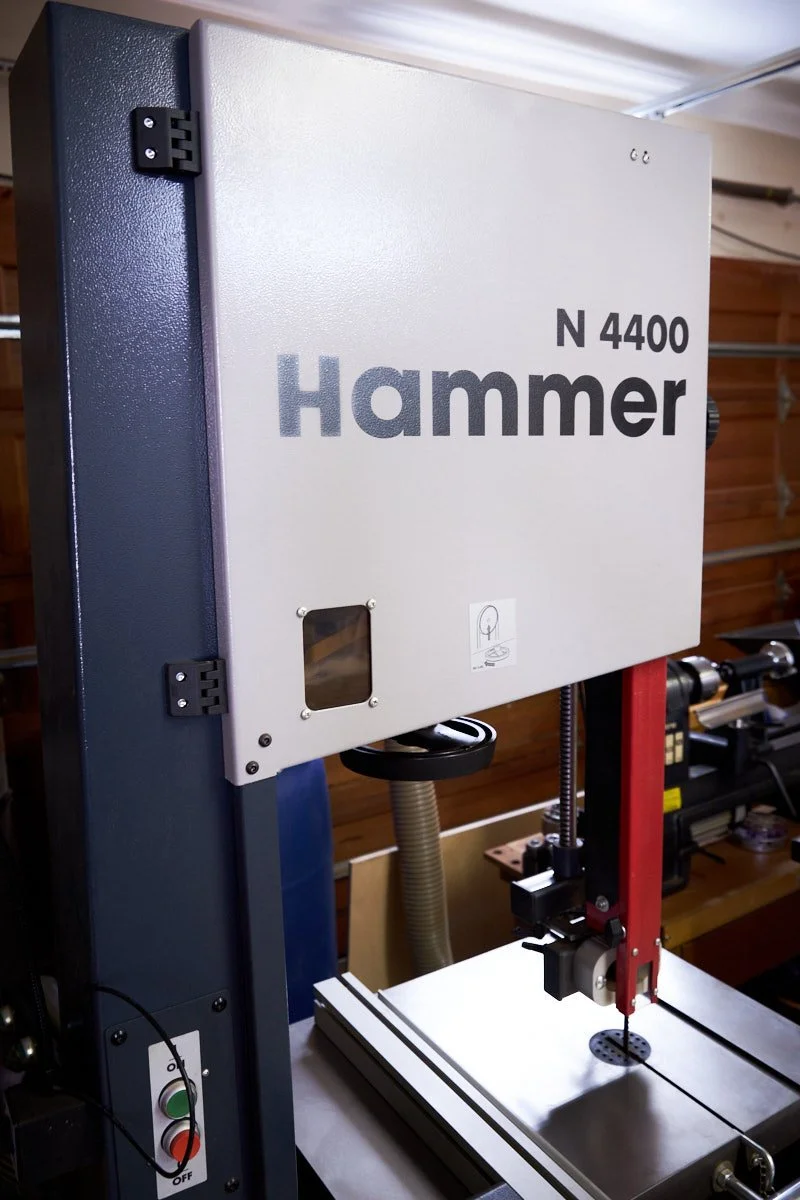
Eventually I became interested in bowl turning and wanted to cut larger bowl blanks. Around that time I came across a Hammer N4400 at a price I couldn’t refuse.
Not long after bringing it into the shop my commissions also started increasing in size. The raw lumber I was processing would have pushed the Metabo well beyond its comfort zone.
The Hammer, on the other hand, hasn’t reached its limits yet.
A larger machine can do small jobs, but a small machine can only take you so far.
The Router Lesson
Routers are a slightly embarrassing story in my shop.
At one point I owned four routers at the same time, which might surprise you because I don’t particularly enjoy using them.
My first router was a Makita RP0900 with a ¼-inch collet. I bought it years before woodworking became a serious pursuit, and it worked perfectly well for small tasks.
When I started my business, however, it quickly became clear that I needed a router with a ½-inch collet to handle larger cutters and work with my Leigh dovetail jig.
While shopping for a replacement I realised that routers with variable speed and larger capacity quickly become expensive. Since I didn’t expect to use large cutters, I chose a Makita with a fixed speed of 22 000 rpm.
For a while it worked fine.
Then I purchased a Peanut Jig from Intelligent Fixings and discovered the cutter required a maximum speed of 11 000 rpm. Running it at double that speed promptly burnt the cutter.
After one particularly memorable catch on the router table I sold off most of my routers and kept only a small cordless DeWALT trim router. Of course, that didn’t last long and the trim router didn’t work particularly well with the dovetail jig and I soon found myself shopping again.
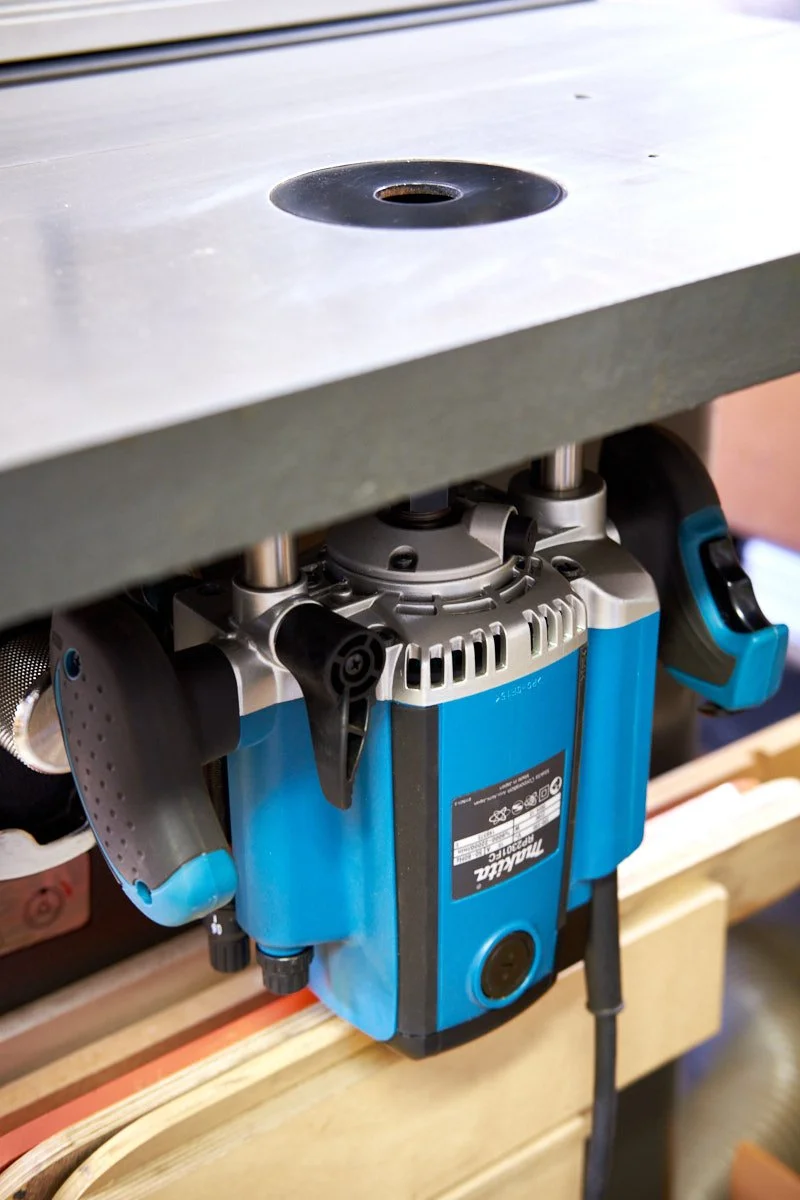
This time I bought a Makita RP2301FCX, a powerful router with proper speed control but for several months it sat unused in its box. Then a commission came in that required extensive template routing on the router table.
Suddenly the router became one of the most capable tools in my shop.
More than almost any other tool I own, it has enabled projects I simply couldn’t have tackled before.
Getting It Right the Second Time
The table saw in my shop tells a slightly different story.
When I first started out I bought the most expensive saw a local supplier offered within my budget. I brought it home, started setting it up, and quickly realised something was wrong. No matter how carefully I tried, I couldn’t get the blade aligned with the mitre slot.
After some back-and-forth the supplier refunded the purchase, leaving me once again without a table saw.
I returned to the same woodworking store where I had spent many hours window-shopping and eventually purchased a mid-range cabinet saw. It turned out to be one of the best purchases I’ve ever made for my workshop. Apart from perhaps my Festool Domino, this saw has become the heart of my shop. It’s accurate, reliable, and capable of handling nearly every job I throw at it.
Occasionally I wish for the capacity of a full panel saw when working with sheet goods, but with careful planning I’ve never had to turn down a commission.
It even came with an unexpected bonus.
One of the wings doubles as a router table, which is exactly where my Makita router now lives.
When a Tool Simply Isn’t the Right Fit
Not every tool purchase works out.
I mentioned the Peanut Jig from Intelligent Fixings earlier, and if there was ever a tool in my workshop that I really wanted to love, this would be it. The jig allows you to create cabinetry using small plastic “peanuts,” but it can also function as a dowelling jig and even cut loose tenons.
On paper it sounds brilliant. In practice, however, it has two major drawbacks for the work I do.
First, it doesn’t work well in solid wood, which is my raw material of choice about 95 % of the time.
Second, it requires a level of concentration that makes it easy to get wrong if you’re not paying close attention.
If I were building kitchens or cabinetry using sheet goods and laminates, it might be an excellent tool. But for the kind of work I do, the Festool Domino is simply the better solution.
A Hand Tool That Taught Me a Lesson
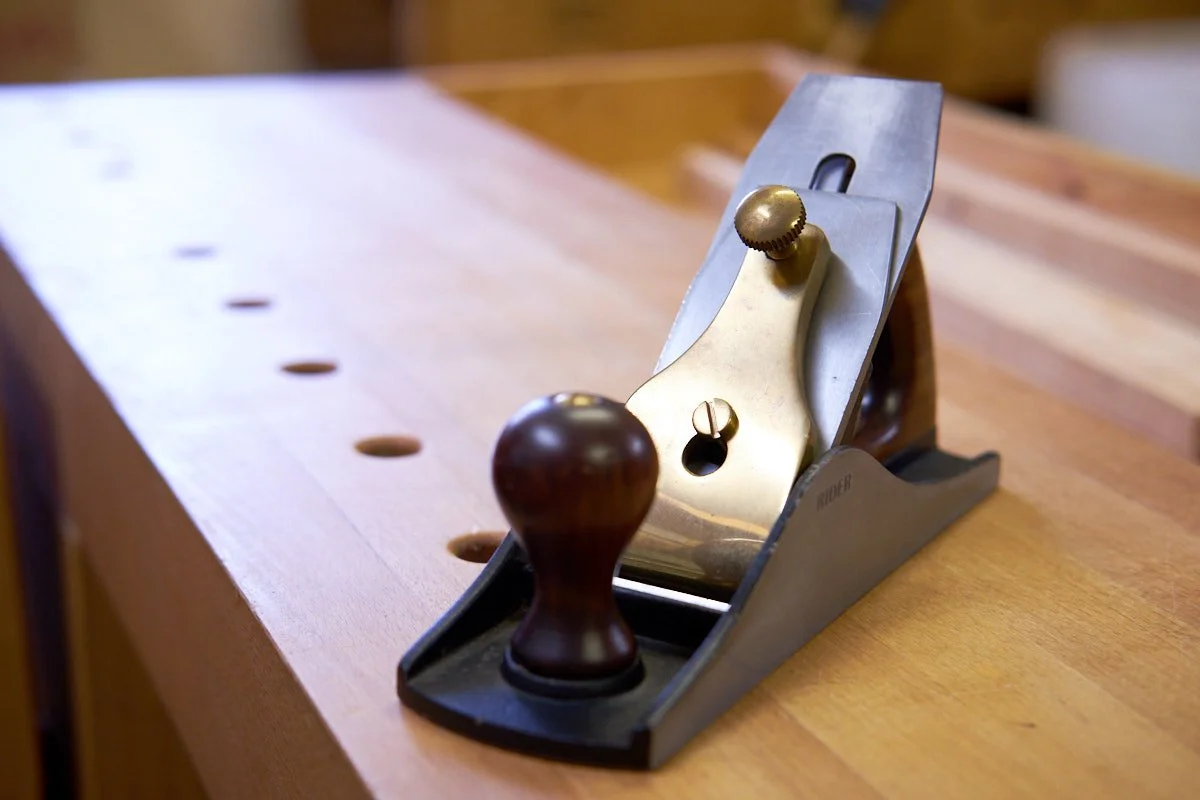
There’s a reason my #4½ smoothing hand plane sits hidden behind my other planes on the shelf.
Not because it doesn’t work — it does.
Not because it isn’t beautiful — it is.
It’s simply too large for the job it’s meant to do.
When using a smoothing plane you typically want something with a relatively narrow blade. Once you move past about 50 mm (2 inches), taking fine smoothing cuts becomes noticeably harder.
The #4½ is wider, heavier, and more difficult to use for delicate work, unfortunately it’s also too short to serve well as a fore plane or jointer.
It’s not a bad tool, it’s simply the wrong tool for the way I work.
And so it sits behind the others, not forgotten, but rarely called into service.
A Workshop That Evolves
Most workshops evolve over time.
Tools get replaced.
Machines get upgraded.
Some tools find new lives doing entirely different jobs.
In my shop, for example, a small bench grinder will soon become a buffing station after being replaced by a better eight-inch machine. My cordless drill has also been upgraded several times as technology improved.
None of that is unusual.
But each of these experiences reinforced the same lesson:
When possible, buy tools that will grow with you rather than tools that only solve today’s problem.
That doesn’t mean buying the most expensive tool available. It simply means thinking carefully about capacity, versatility, and how your workshop might evolve.
The goal isn’t to buy the perfect tool.
It’s to avoid buying the same tool twice.
One Question Worth Asking Before You Buy
Before buying a new tool, I now try to ask myself one simple question:
“Will this tool still serve me in five years?”
If the answer is yes, it’s usually a good investment.
If the answer is no, there’s a good chance you’ll eventually replace it.
And as most woodworkers discover sooner or later, replacing tools is almost always more expensive than buying the right one the first time.

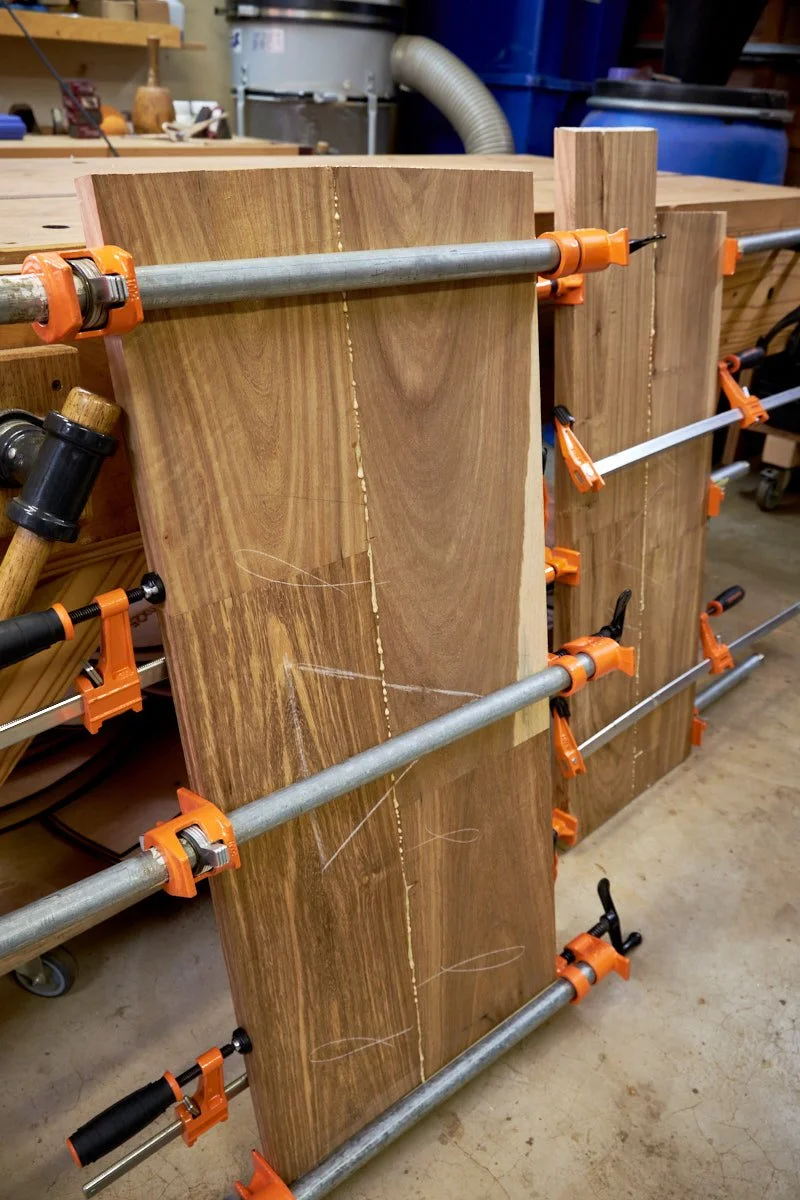
Mitre joints look great — but they’re not always the most practical choice. In this article, I walk through why I prefer rebate joints for corner construction, how they compare to mitres, and when each one actually makes sense in the workshop.