
A Short Review of The Metabo SXE 450 Turbotec Random Orbital Sander
Off the bat I feel that I should let you the reader know that I used to dislike sanding.
Lately sanding has become nominally bearable if not at times somewhat therapeutic. Please don’t tell anyone in the woodworking circles where I spend my time that I’ve just used the words sanding and therapeutic in the same sentence, I’ll never hear the end of it!
How do I usually get to the final surface finish on my projects you may ask?
Well, if you’ve spent any time on my blog you would know that I regularly use hand tools during builds and more often than not, the last tools to touch the surfaces of my projects are hand planes or scrapers or a combination of both.
Why even use sanders if my first loves are the hand plane and scraper?
Size.
Some of the projects I undertook in the last few months had large surfaces that needed to be finished and were ultimately too large for me to comfortably get to with a hand plane or a scraper. One such project was a boardroom table I built towards the end of last year, with a top 3.5m long and 1m wide it became the final motivation to get over my snobbery of hand tools, get with the program, and finally pull the trigger on a decent random orbital sander.
As with most purchases of this nature it all started with a fair bit of research that left me somewhat enamoured with the Bosch GET 75-150 and only slightly less so with it’s competition in the form of the Festool Rotex RO 150.
A spanner got tossed into the proverbial works so to speak when at a local woodworking show the guys from Metabo stuck the Metabo SXE 450 Turbotec into my accepting little hands and allowed me to take it home to play with. After slapping some 80grit paper onto it and setting it to the turbo boost function I took it to a piece of raw timber. It made quick work or the bandsaw marks on roughly an A4 sized section and I had the piece of wood down to a semi finished surface in no time flat!
I was impressed.
After my experience with the Metabo I was offered an opportunity to test the Festool Rotex at another event and at the risk of offending a large proportion of Festool lovers out there I wasn’t blown away by the performance and handling of the tool, at least not roughly 4-5 times the price blown away! The dust extraction and final surface finish was no better than that offered by the Metabo and although the geared nature of the Festool allowed for faster material removal this wasn’t the main reason for needing a sander when I really needed a tool for finishing rather than fast material removal. I am aware that I should be comparing apples with apples so the ETS line of Festool sanders would have been a closer match to my requirements but the fact that the Metabo had the turbo boost function when needed made it in my opinion a more versatile tool, especially at it’s cost compared to Festool and Bosch.
I didn’t even consider Makita or DeWalt by the way.
The Metabo got my vote over the other options and here’s why.
Ergonomics and Balance
The feel and handling of the sander is comfortable and I experienced no discomfort either while using it or at any time afterwards.
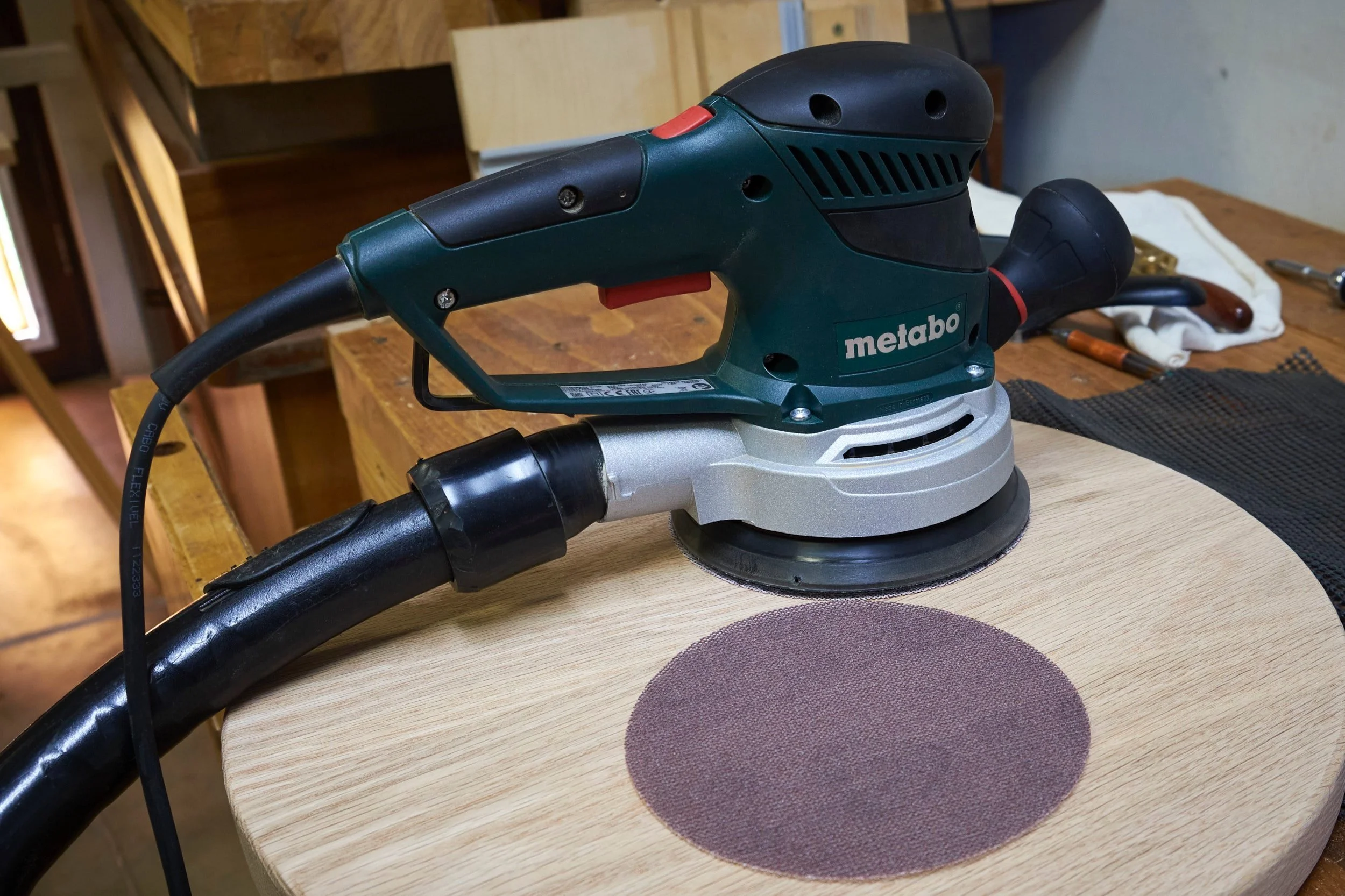
Look Ma no hands!
Due to its great balance I can easily operate the Metabo sander one handed, leaving my free hand to keep the dust collection hose from falling out.
I was able to place even pressure through the machine and onto the work surface with a single hand resting on the top of the sander and when I needed a bit more pressure I found that I was able to put down even pressure by placing a second hand onto the knob on the front of the machine without the tool becoming unbalanced. Best part of all was that it took little concentration on my part to get even pressure onto the machine which in turn ensured even contact between the sanding pad and the work surface. This was something I struggled with on the Rotex, it seemed that using it required more focus and that one handed operations would be out of the question if not tricky.
Why is one handed use important? It’s a unique quirk specific to my workshop and relates to my dingy dust collection setup!
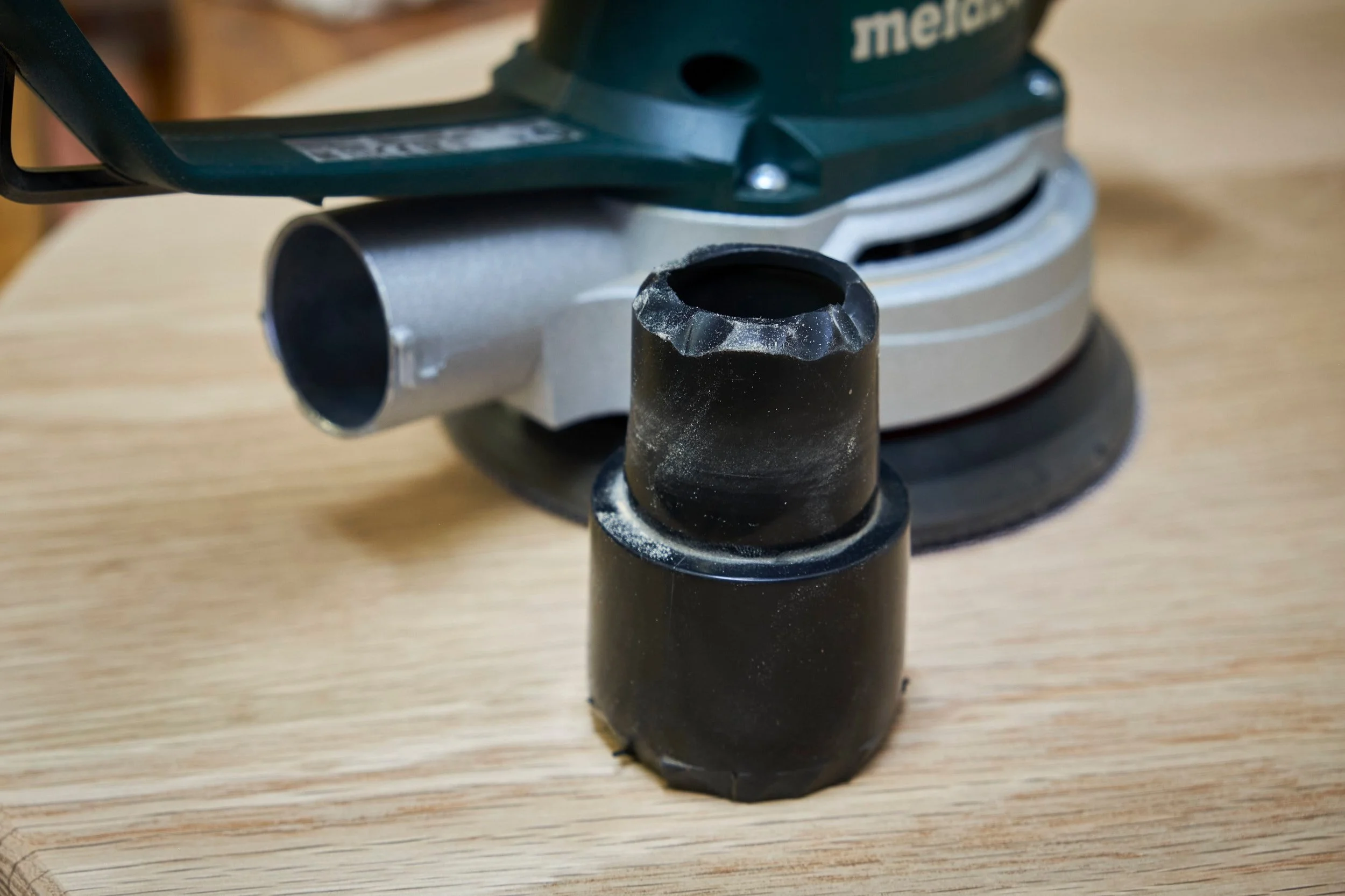
I use a simple job site vac connected to a small cyclone collector to handle dust collection during smaller jobs in the workshop such as sanding with my small DeWalt sander or when using the Domino. The connection between the vac and my tools isn’t particularly refined and the weight of the pipe to the vac can cause the connection to the tool to come undone during use. This results in me having one hand on the machine applying pressure and the other cradling the vac connection to stop it from separating during use. When I tried the Rotex I found the balance uncomfortable and I know that the fear of the vac pipe pulling the sander off the workpiece and onto the floor would keep me awake at night!
It sounds fiddly and more trouble than it’s worth to have to manage, but honestly I spend so little time sanding that it’s not worth finding a complicated solution or spending the money on a dedicated shop vac system, by the way have you seen what those cost, and that for a vacuum cleaner!
Who knows, I may get around to building a shop vac trolley one day and when I do the plans will be available on my website, If you’ve signed up to become part of the community you would have FREE access to those plans. If not and you would like to have a look at the plans I have on offer you can sign up for free here.
Anyway the Metabo is comfortable to use.
Turbo Boost
Fast material removal may not be your primary reason for purchasing a sander but it’s nice to know it could remove lots of material if it needed to.
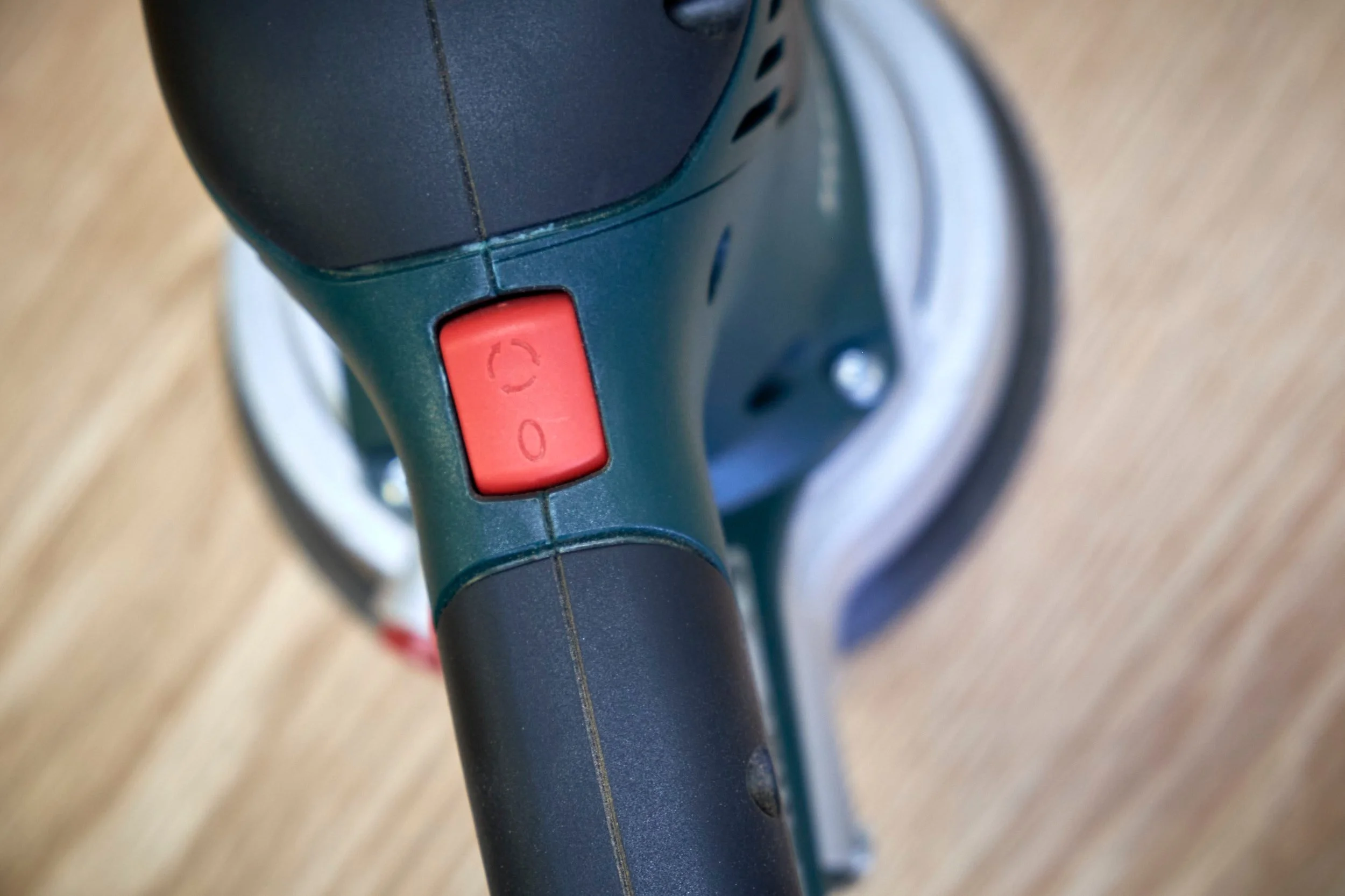
Turbo boost also helps if you’re lazy.
I use 80 grit in turbo boost mode to get an even surface quickly and once I move on to higher grits I switch it off. The function becomes especially useful when you discover snipe from your thicknesser on an end of a laminated board that make up your table top.
The material removal might not be as fast as with a geared sander but is most certainly good enough for occasional needs. If you make money building river tables or regularly work with epoxy on large surfaces get a geared sander. I have used epoxy on my last projects to fill knots and imperfections and the Metabo made quick work of getting the epoxy down to the level of the rest of the table using turbo boost.
An interesting point to take note of.
I was informed by the guys at the store that using the sander in the turbo boost setting for too long tends to damage the sanding pad due to heat build up as a result of increased friction. Their suggested workaround was to get the Festool 150mm protection pad that goes between the sanding pad and the paper to offer the necessary buffer for heat protection.
I followed their advice and the protection pad stays on the sander permanently.

Versatility
You can set the swing of the pad to 2.8 OR 6.2mm and this offers a lot of versatility in a single package. The larger swing provides higher material removal and surface coverage whilst the smaller provides a better surface finish.
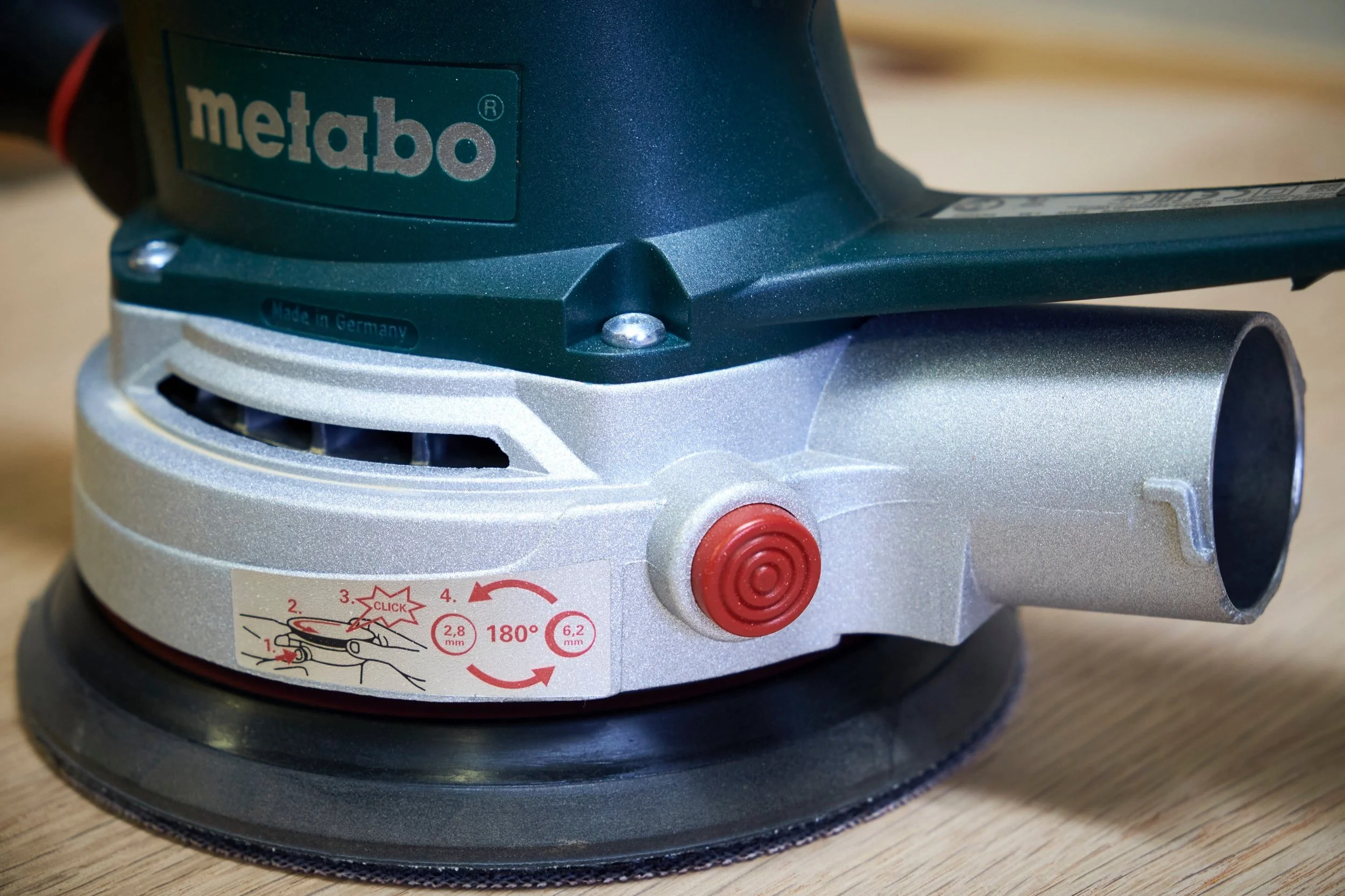
If you ignore the turbo boost completely you have a sander that will allow you to flatten and finish a large surface efficiently (6.2mm) and then will allow you to give the work surface a final polish at higher grits (2.8mm) with a relatively simple change to the swing setting.
Now add to this the turbo boost and you have a “do it all” tool at the fraction of the cost of having to purchase multiple dedicated machines to get to the same result. Granted the Metabo may not excel in fast material removal but it’s fast enough for my needs and as soon as the turbo boost is switched off it works just as well as any other random orbital sander, at least when looking at the final surface results I’m getting.
I do admit that I haven’t used the 2.8mm setting yet as I don’t need very smooth surfaces on my projects. The preferred finish that I use to seal the wood requires that I sand the surface down to between 100 and 150 grit and a polished surface is not only unnecessary but also counter productive when applying these oil finishes.
If you haven’t checked out my article on the ProNature finishes that I use you can read more here.
Adjustable Speed
Adjustable speed isn’t anything unusual on random orbital sanders and in the case of this sander the no load speed can be adjusted to between 4200 - 11000 RPM by way of an easy to reach thumbwheel on the top front of the machine. I can reach the adjustment wheel with the index finger of the single hand that is on top of the sander and adjust the speed on the fly so to speak, I can but I don’t.
I set it to number 5 or 6 (MAX) and just leave it there. I’m not a specialist in sanding but as far as I understand from my research is that the lower speeds are usually only needed for special use cases or materials.
Longevity
No idea.
I likely don’t use it often enough to ever wear it out and I can tell you that I use my Metabo circular/track saw a lot more and it has never skipped a beat. As far as I can gather from talking to other woodworkers that they have very rarely had any issues with Metabo tools and my own experience seems to confirm the reliability of Metabo equipment in general.
I think my sander will still be operating for many years to come.
Vibration and Noise
This might be a big one for many of the readers of this review and in all my research on different sanders I was surprised that vibration came up more often than possibly any other topic.
Speaking for myself I have at no point experienced any discomfort as a result of vibration either whilst in the act of sanding or after. I do not have sufficient experience using sanders from other manufacturer’s to provide a real world comparison so I can only give feedback based on my own experience with the Metabo.
The vibration on the spec sheet is stated as 7 m/s squared for those who actually know what that means or want to compare the numbers to other sanders.
The noice emissions are stated as between 82 and 96 dB but I always use hearing protection when using the tool so no issues for me there.
If you need all the numbers you can find the technical specs here.
That was my “not so short” review of the Metabo SXE 450 Turbotec random orbital sander.
In summary these are the pro’s and con’s.
Pro’s
Powerful motor at 350W will handle all the jobs I’ll be throwing at it.
Cost, it’s not a budget item but for what it offers it’s a bargain.
Comfortable to use.
Doesn’t vibrate excessively resulting in no discomfort both during and after use.
Turbo boost allows fast material removal when needed.
Swing adjustment allows both routine and fine finishing.
Adjustable speed.
Good reputation for reliable tools.
Solid dust extraction even with my “semi professional” setup.
Con’s
No hard case storage container, the sander comes in a cardboard box and I would really have liked to be able to store it in it’s own container like is the case with my Metabo circular saw.
I find the process of changing the swing between 2.8 and 6.2mm fiddly and it isn’t always clear if the setting has actually changed.
I can honestly not think of any more con’s or things that I don’t like about this sander. It does everything I ask of it and the results are really good and on top of all of that I actually enjoy using it.
I’m not a converted “sander” yet though and I can still get to a final finish using hand planes faster than I can using a sander but I no longer dread the process of sanding if and when it’s required, which to me is a win.
If you are looking for a new sander give the Metabo SXE 450 Turbotec a go, you might just like it as much as I do, you might even start liking to sand once you’ve started using it.


My initial impressions of the Axminster Ultimate Edge. In this article I look build quality, speed, accuracy, and why it might just be your new favourite sharpening system.