
Your First Specialty Hand Plane
By now, you’ve likely picked up a No. 5 jack plane and are either using — or waiting on — your low-angle block plane after finishing the previous article in this series.
At this point, many beginners ask the same question:
“What hand plane should I buy next?”
This is usually where the idea of specialty hand planes enters the conversation.
In this article, I’ll walk you through my four favourite specialty hand planes for beginners, explaining what each one does well and where it fits into a growing hand-tool kit. Rather than arguing for a single “correct” choice, I’ll give you enough context to decide which plane makes the most sense for your work.
I’ll start with my least favourite and work up to my most loved. These choices are based on how I work in my own workshop, but by the end you should have a clear direction for further research, and possibly your next purchase.
What is a specialty hand plane?
A specialty hand plane is designed to excel at a specific task rather than serving as a general-purpose tool. Many are used primarily for joinery, while others solve very particular problems that standard bench planes struggle with.
They’re not essential on day one, but once you move beyond rough stock and into accurate joinery, they quickly become tools you reach for when accuracy and control matter.
OPTION 1: The Bullnose Plane
I’ll be the first to admit that this small, unassuming hand plane doesn’t see constant use in my workshop. That’s largely because its main role overlaps slightly with that of the low-angle block plane, that of breaking sharp edges and easing arrises.
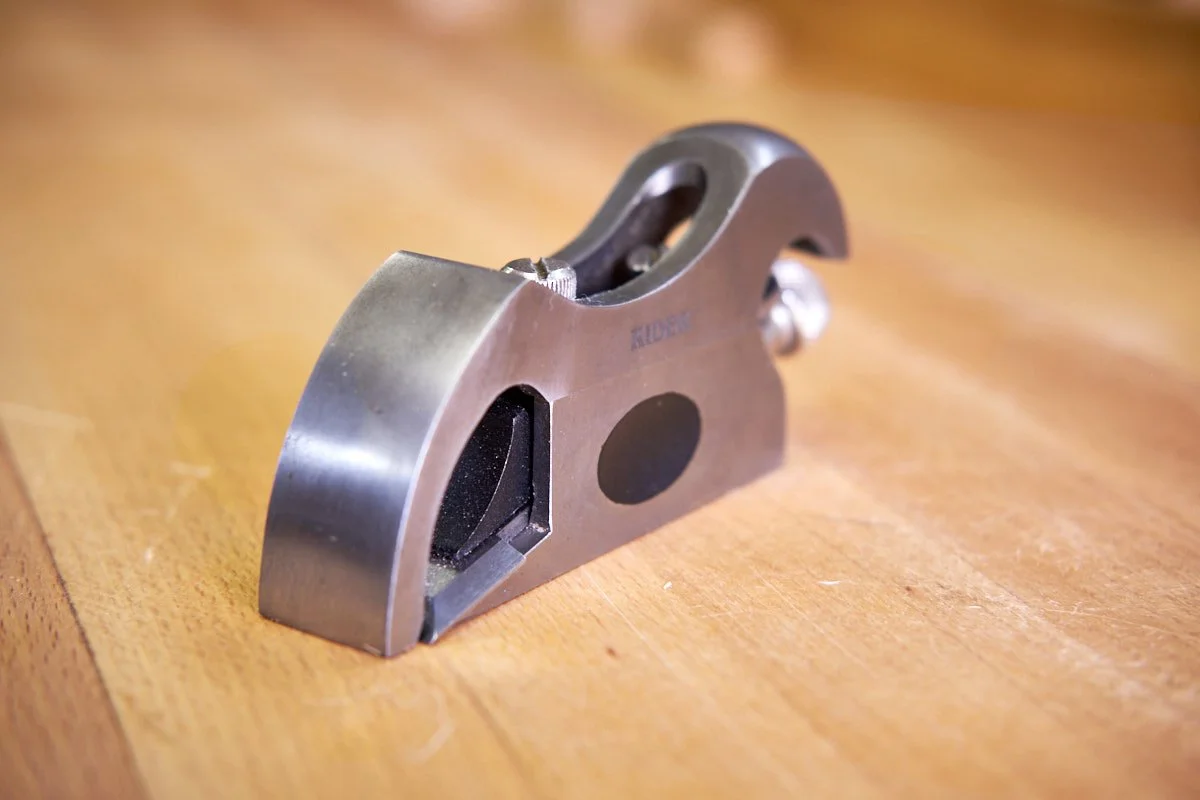
Where the bullnose plane earns its keep is at the front of the tool.
The nose is extremely short, placing the cutting edge very close to the front of the plane. This allows it to reach into tight corners and awkward areas that a block plane simply can’t access. It’s ideal for softening sharp edges inside drawers or cleaning up areas you forgot about before glue-up.
The bullnose plane has an open mouth, meaning the blade can be set flush with the side of the body. This allows it to trim right into corners, clean up fuzz, and even square small areas of joinery. In a pinch, it can be used as a shoulder plane, although the short nose provides very little registration, making that task somewhat fiddly.
One clever feature sets this plane apart.
The front section of the body can be removed entirely, turning the plane into a chisel plane. Used this way, it excels at cleaning glue from tight joints and reaching places no other plane can. I’ve lost count of how many times mine has saved me in a tight spot.
Yes, that does include fettling runners for a crosscut sled that stubbornly refused to fit the table saw’s mitre slots.
OPTION 2: Cabinet Scraper Plane (Stanley NO. 80)
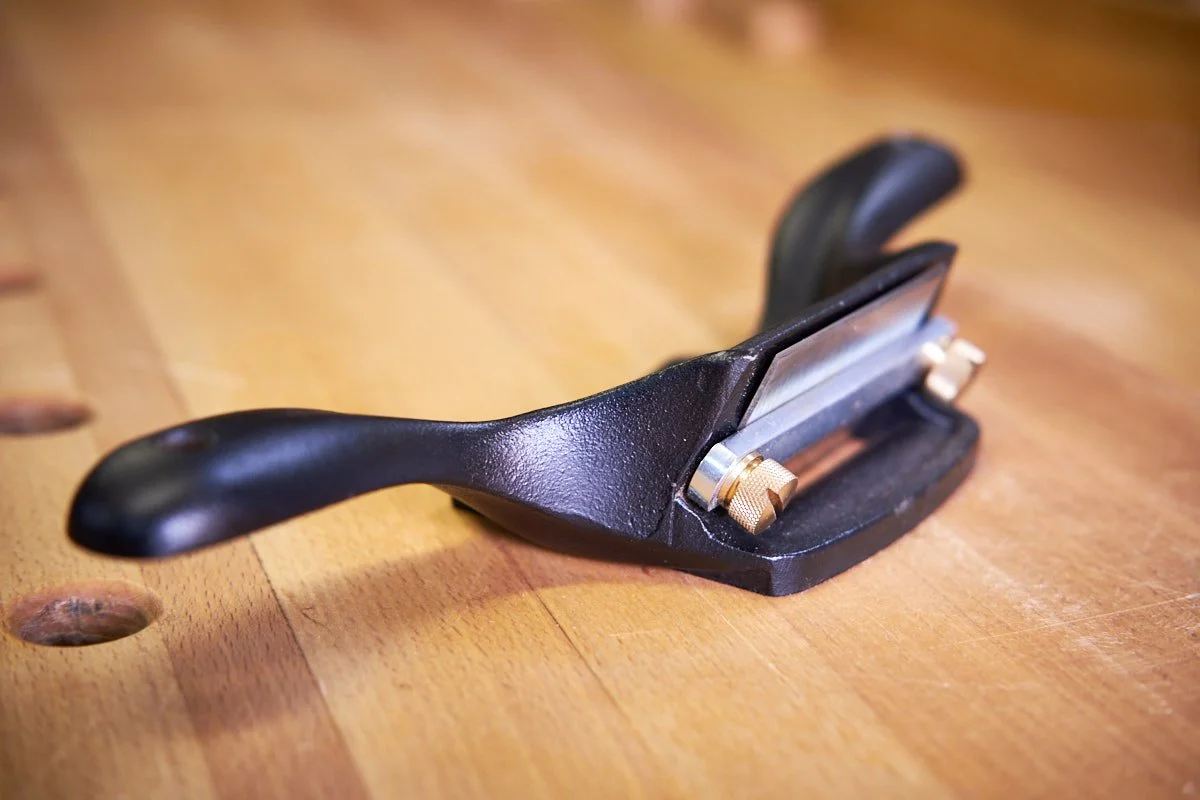
Some woodworkers don’t even consider this a hand plane, but it absolutely earns its place here.
The cabinet scraper — commonly known as the Stanley No. 80 — is one of those tools you may not use often, but when you need it, nothing else will do the job quite as well.
To be clear, a No. 80 is not a card scraper, nor is it simply a holder for one. While both tools remove tear-out using a hooked edge, that’s where the similarities end.
Tear-out is an unavoidable reality in woodworking, especially when working with figured or unpredictable grain. Sometimes a board simply refuses to be planed, no matter how sharp your plane iron is.
In most cases, a card scraper will solve the problem. Occasionally, however, it won’t, and that’s where the cabinet scraper shines.
Because the blade is mounted in a body with a sole, the tool helps maintain a flat surface while scraping. Card scrapers work in very localised areas, and if you’re not careful, it’s easy to introduce hollows. On large surfaces this may not matter, but on smaller furniture parts it certainly can. The sole of the cabinet scraper prevents the blade from digging in too aggressively, keeping surfaces flat and even.
Sharpening the blade takes some practice. The iron is ground with a 45° bevel and finished with a rolled hook, but it’s exactly this geometry that makes the tool so effective at dealing with stubborn tear-out.
OPTION 3: Fillister / Rebate Plane (STANLEY NO. 78)
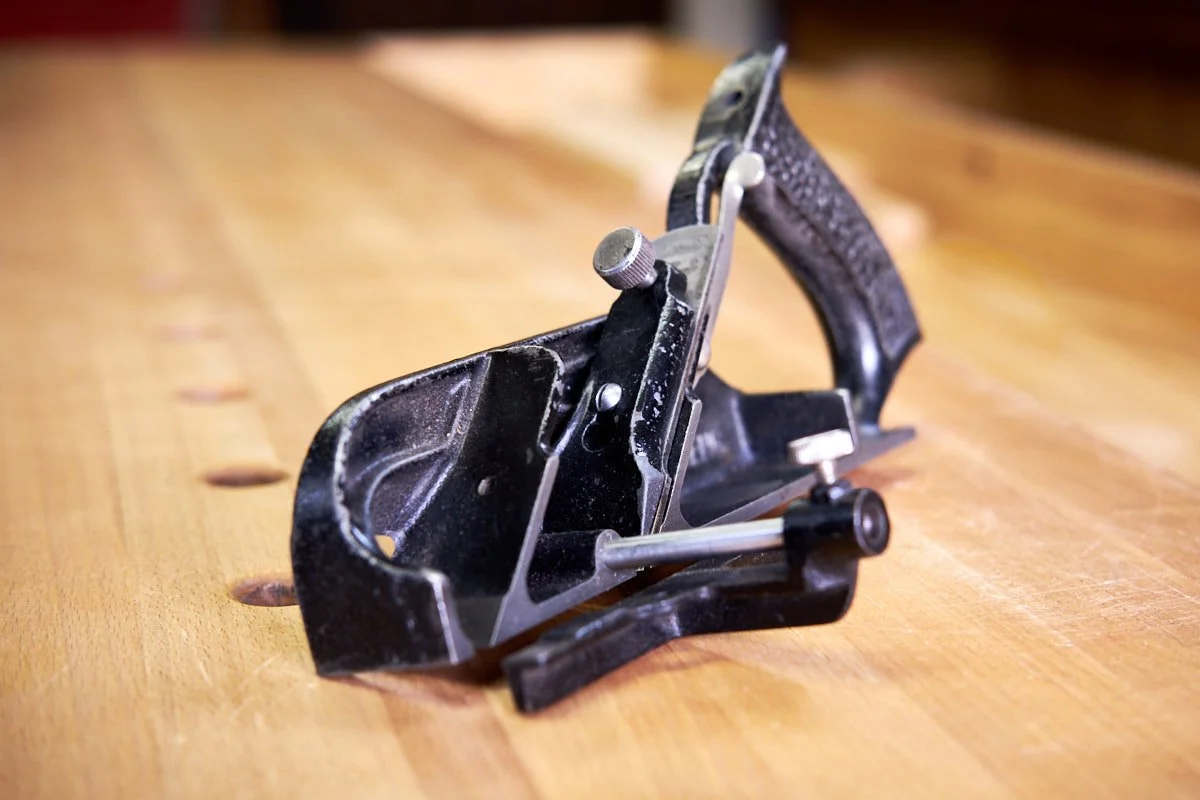
This plane cuts rebates.
Often known as the Stanley No. 78, the fillister or rebate plane excels at cutting across the grain. It does this using a small auxiliary blade — commonly called a knicker or spur — mounted ahead of the main iron. This blade scores the fibres before the main cutter follows through, producing a clean rebate with minimal tear-out.
The plane includes an adjustable fence to set the width of the rebate and a depth stop to control how deep the cut goes. It can also cut grooves along the grain, but cross-grain work is where it really stands out.
Rebates are one of my favourite joints, and I recently picked up a mint Stanley No. 78, still in its original box with the manual included. That acquisition had absolutely nothing to do with this plane making the list.
Completely unrelated.
OPTION 4: ROUTER PLANE
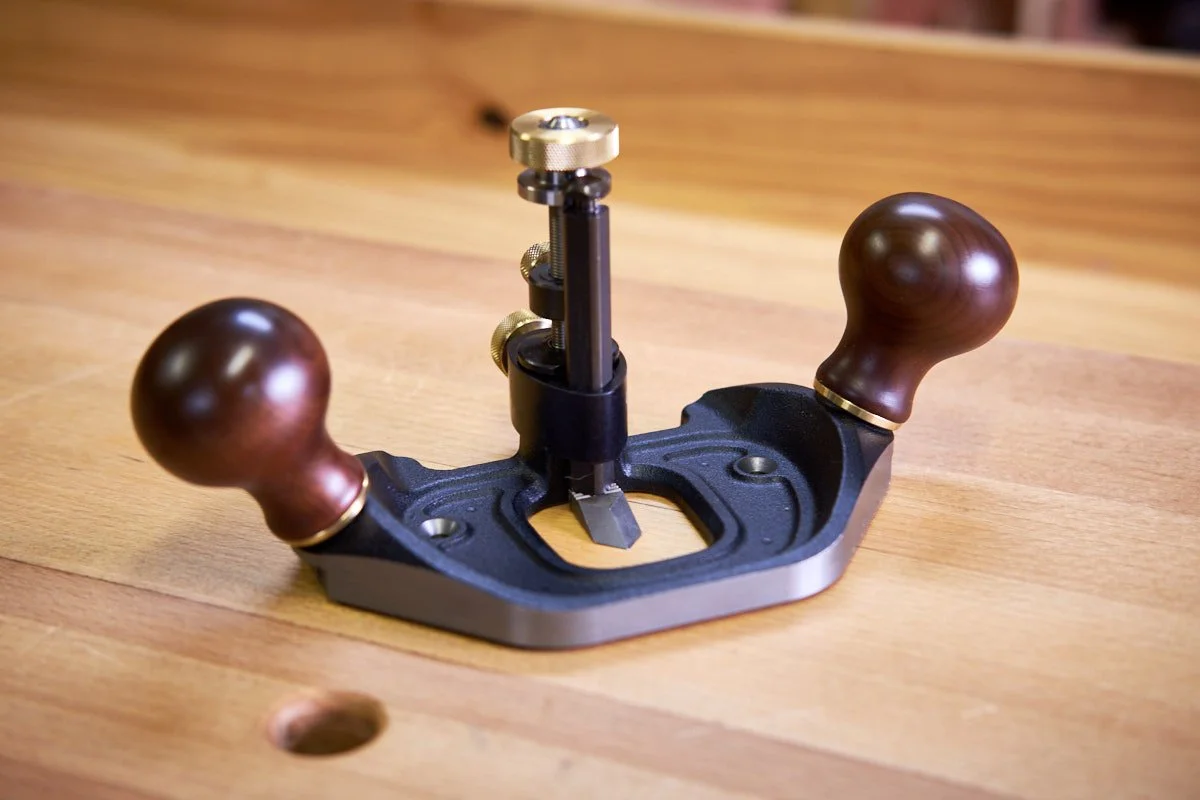
If there’s one specialty plane that consistently earns its place on the bench, it’s the router plane.
In many ways, it does what a router does, but more accurately, safely, and with far more control.
Its most common role is cleaning up the bottoms of rebates and grooves, but with care it can cut them as well. The ability to set cutting depth precisely makes it invaluable for fine joinery and joint fitting.
It excels at flattening the bottoms of mortises, which is especially useful when fitting handles to wooden hand planes or working on joinery where depth consistency is critical.
A lesser-known but incredibly useful application is refining tenon cheeks. With fine depth adjustments, you can sneak up on a perfect friction fit without guesswork or frustration.
I’ve also yet to find a better tool for cutting hinge recesses.
Modern router planes are based on the Stanley No. 71 pattern. I own both an original Stanley and a contemporary version by Veritas. While I prefer the Veritas, the Stanley remains an excellent tool. Better still, Veritas blades fit the Stanley, making upgrades straightforward if you’re working with vintage tools.
If I had to choose one specialty plane to follow a block plane, this would be it, without hesitation.
WHERE THIS FITS IN YOUR HAND PLANE JOURNEY
At this point, your collection likely includes three hand planes.
Possibly more?
Is this list exhaustive? Not even close.
Spokeshaves, grooving planes, shoulder planes, and rebate block planes would all be excellent additions. And if you stick with hand tools long enough, your collection will grow. Trust me.
That said, the planes covered here offer the best balance of versatility and value for someone moving beyond the basics.
If you’re looking for a cost-effective way to expand even further, consider building your own hand planes. I’ve documented the entire process in a six-part series right here on the site — a great way to deepen your understanding of how these tools really work.

A hands-on comparison of the three most popular hand-sharpening systems — diamond stones, Japanese water stones, and the “scary sharp” method. I’ll share the real pros, cons, and quirks of each, along with what I actually use in my own workshop.