
Why Your Second Hand Plane Should Be a Low Angle Block Plane
You’ve followed the advice in my previous article and your #5 Jack is now sitting proudly on your bench—set up, sharp, and ready to work. As you spend more quality time with your new favourite tool, a natural question comes to mind: What’s next?
For now, forget about a #4. Your Jack will pull double duty as a smoother. A #7 or #8 jointer? Unless you’re regularly dimensioning large boards, you can skip those for now too. And honestly, learning to use your #5 to flatten and square up bigger pieces is worth the practice.
What you need next is something far more versatile: a low angle block plane.
My Luban low angle block plane was not only my first hand plane, it’s also the most used plane in my workshop. There are very few projects where it doesn’t make an appearance.
Here are the three reasons I recommend one as your second plane.
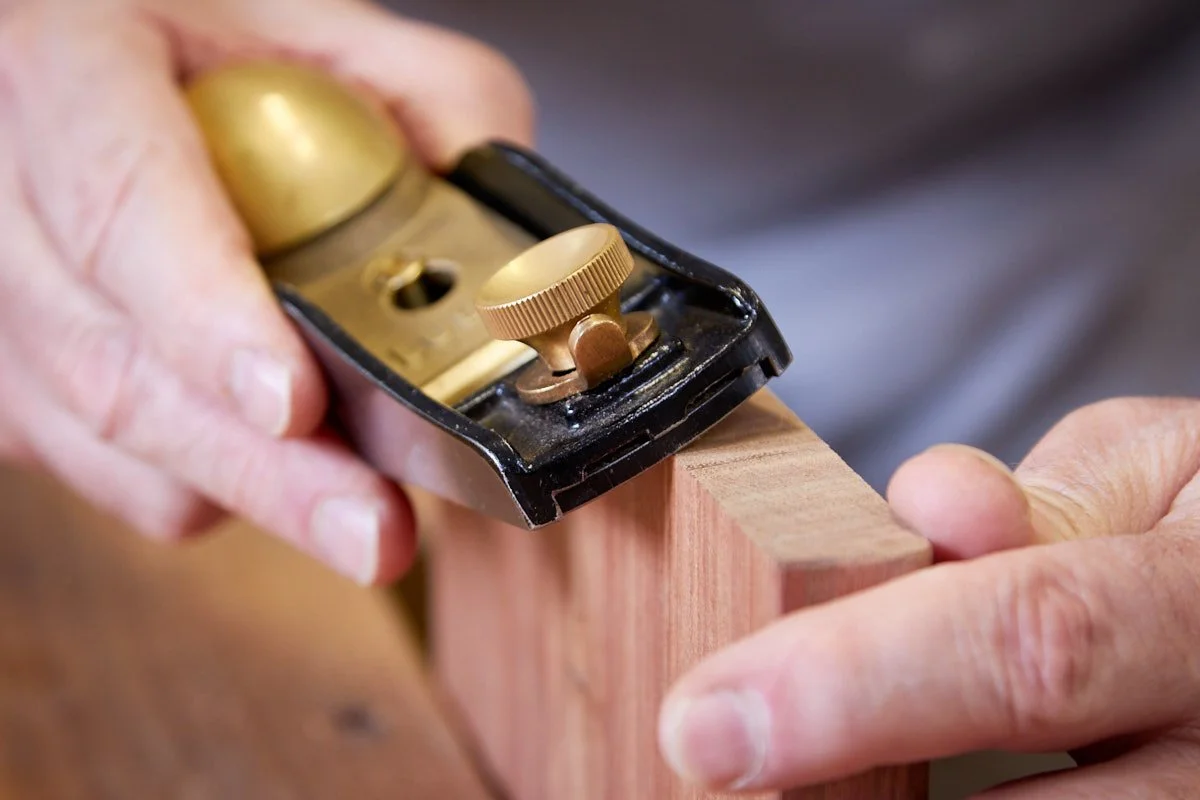
1. Rounding Edges
From breaking an arris to cutting heavy chamfers, a block plane handles edge shaping cleanly and effortlessly. Angle the plane slightly, set it for a fine cut, and it will ease edges beautifully, protecting both the project from unwanted break out and the user from sharp corners.
Block planes also excel at chamfering the bottoms of furniture and especially chair legs to avoid blow‑out when the piece is dragged across the floor. Yes, a router can do much the same, but by the time the bit is installed and the tool is set up, the block plane would have finished the job. Without the wobble that comes from balancing a router on awkward angles and tiny surfaces.
Better still, block planes work just as well on plywood and MDF as they do on solid timber. Mine stays on the shelf with its blade permanently set for a cut.
If you bought a block plane solely for rounding edges, you’d already be winning.
You can even build your own if you follow along with my DIY plane build series here on my site.
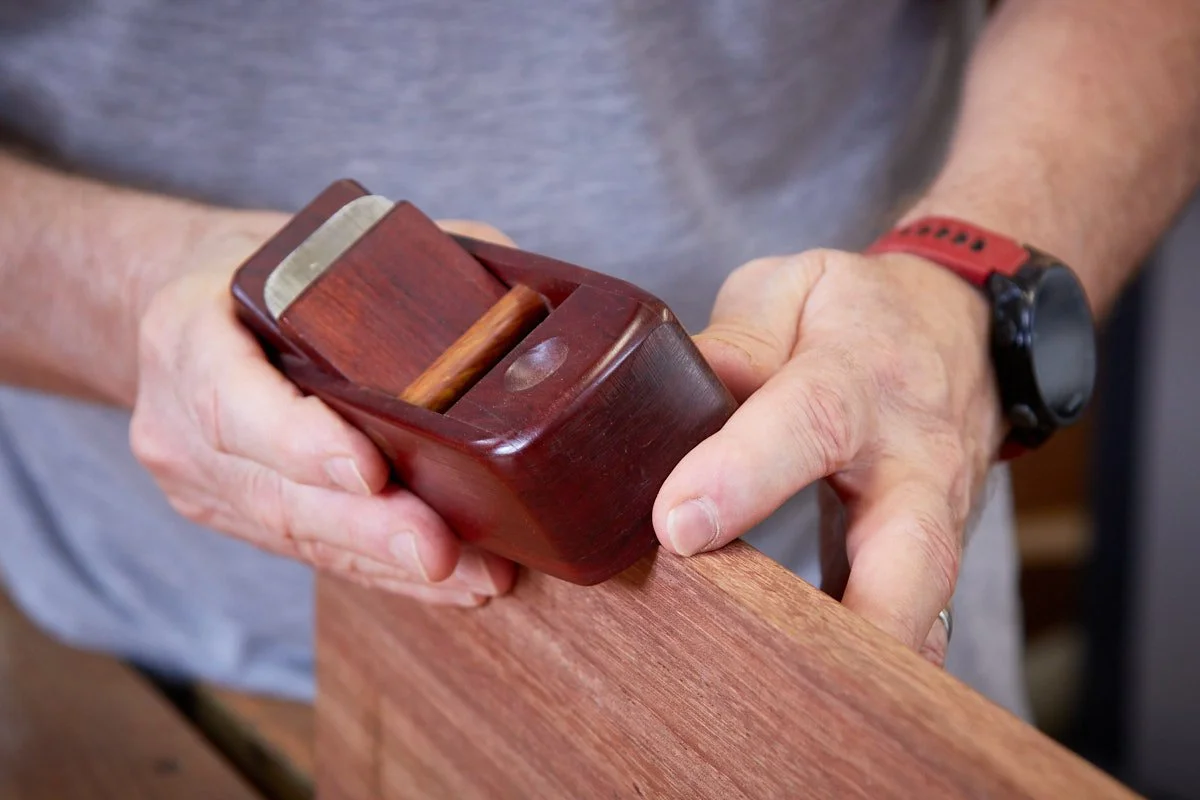
2. Planing End Grain
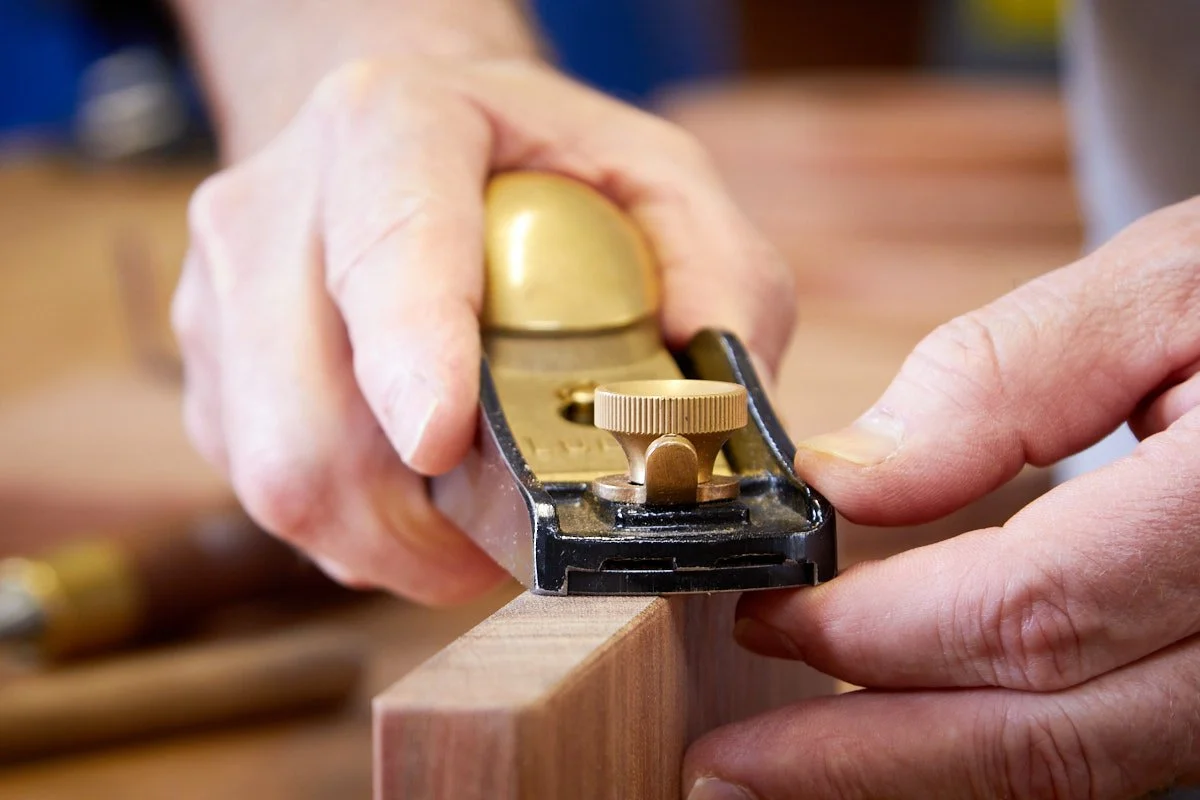
Some woodworkers insist you don’t need a low angle plane for end grain, as long as the blade is sharp. They’re right. But what they don’t say is how effortlessly a low angle block plane slices through end grain, even when the blade isn’t perfectly sharp.
Its compact size makes it ideal for cleaning and levelling the end grain on chair and table legs, as well as the tiny surfaces found on boxes, drawers, and other small parts. Larger bevel‑down planes can work, but they’re awkward to balance on narrow stock.
A block plane is simply easier.
I’ve heard some woodworkers swear by the block plane on a shooting board for small parts. While I’ve not tried it myself, my low angle Jack sees enough shooting‑board duty that I’m inclined to believe it.
3. Size and Control
A block plane fits comfortably in one hand, and because of its small footprint, it excels at targeting precise areas. The larger the plane, the harder it is to judge where the cutting edge is in relation to the area that needs attention.
I find that with the block plane, I can much easier work on small areas and use it one handed 95% of the time.
The downside? Because I use it with only one hand it’s also the tool I drop the most. In fact, the first video on my channel shows me repairing mine after the cap iron screw stripped out after one drop too many!
Limitations?
Bevel‑up planes shine on end grain, but with a 25°–30° bevel blade installed they’re more prone to tear‑out on face grain. Manufacturers offer steeper beveled blades to address this, but I’m not fully convinced yet, preferring to reach for my bevel down planes when working on face and edge grain.
That hasn’t stopped me from occasionally using my block plane for cleanup on board faces simply because it’s the closest tool at hand. And yes, I’ve often paid the price by needing to redo the work with something more suitable.
So now your hand‑plane collection has grown to two, and it probably won’t stop there.
Once the bug bites, you’ll soon become used to using a hand plane even in a machine‑heavy shop. You may even delay buying that fourth router in favour of a third plane… then a fourth… and a fifth…
What comes after?
For a third plane, I’d look at either a dedicated #4 smoother or a #7/#8 for processing larger stock. Perhaps a second #5 converted into a scrub?
Or maybe something more specialised.
Watch this space—I have ideas.

What does it take to turn an idea into something that actually works? I share what 3D printing is teaching me about prototyping, from adapting designs and testing small parts to choosing materials, asking for help and staying organised.